
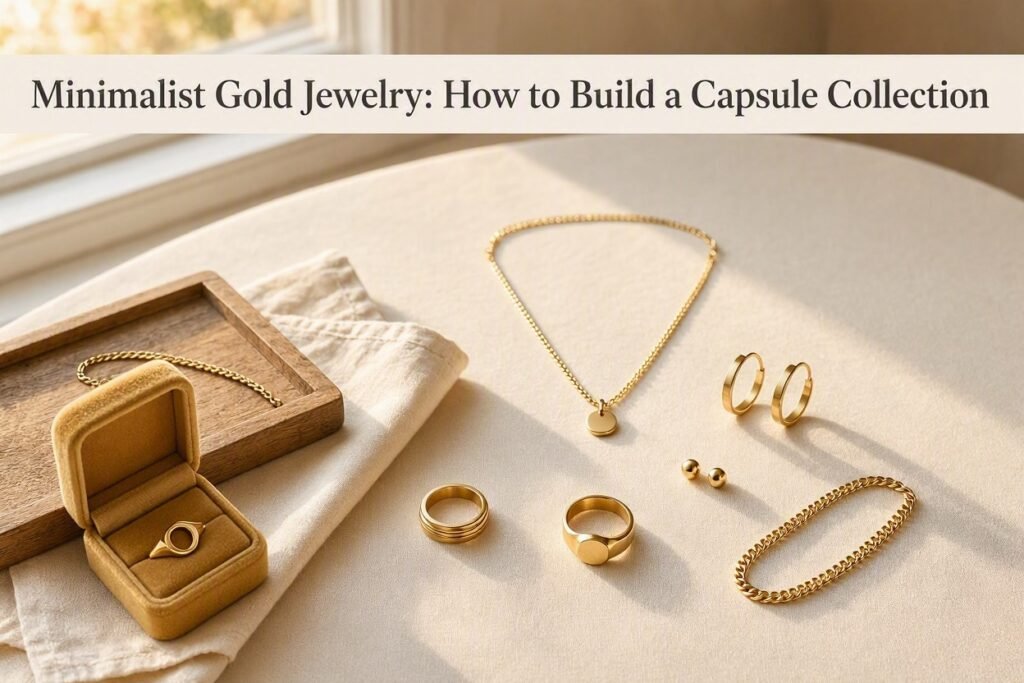
Chunky chains and bold statement pieces get most of the attention, but there’s a quieter way to wear gold, and it tends to last a lot longer. Minimalist gold jewelry is built around a handful of thin, well-made pieces you can wear every day without thinking about them. This guide walks through what a capsule collection actually looks like, which pieces to buy first, and how to make delicate gold last.
What Minimalist Gold Jewelry Actually Means
Minimalist doesn’t mean cheap or plain. It means restraint: clean lines, thin profiles, little to no stone work, and shapes that don’t compete with your clothes. A 1mm cable chain, a plain band, a small huggie hoop: these are the building blocks.
The appeal is practical as much as aesthetic. Delicate gold layers well, works in an office, survives a gym bag, and doesn’t date the way a trend-driven statement piece can. If you’ve ever bought a bold necklace and worn it three times, the minimalist approach is the correction.
A capsule collection takes that idea further. Instead of accumulating pieces one impulse at a time, you build a small set, usually five to eight items, where everything works with everything else.
Start With the Metal Decision
Before buying anything, pick a lane: yellow, white, or rose gold. Mixing metals is fashionable and perfectly fine, but a capsule works best when there’s a dominant tone. Choose the one that matches the jewelry you already reach for.
Then decide on karat. For pieces worn daily, 14k is the practical sweet spot: it holds up to friction better than 18k while still looking unmistakably gold. Reserve 18k for items that see less abuse, like a pendant necklace. If your budget is tighter, thick gold vermeil (gold over sterling silver) is a reasonable entry point, though it will need replacing eventually.
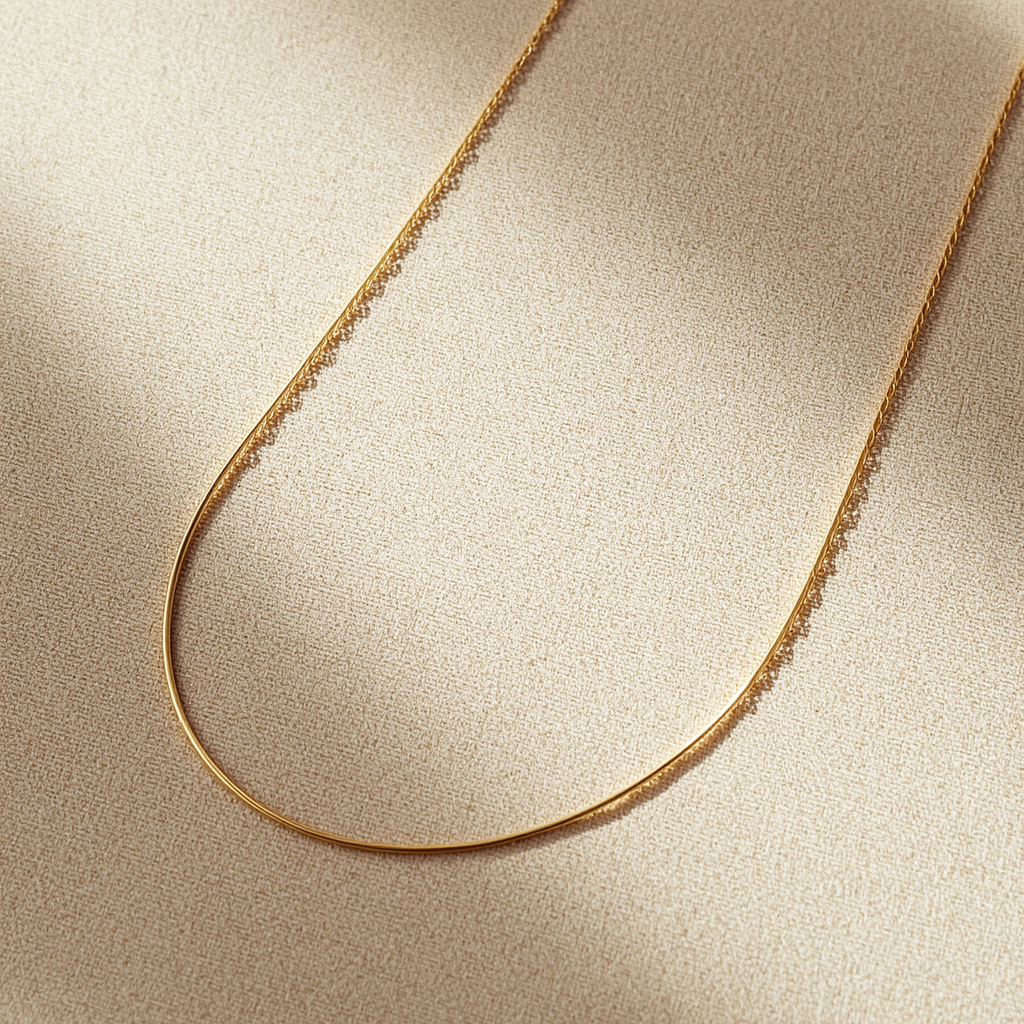
For a first everyday chain, a simple 14k cable or box chain in 16–18 inches is the safest possible buy. Look for a thin everyday gold chain with solid, not hollow, construction if you plan to wear it daily.
The Seven Pieces Worth Owning
Here’s a minimalist gold jewelry capsule that covers almost every situation without redundancy:
- A short chain (16–18″): sits at the collarbone, layers under everything
- A longer chain (20–24″): creates the second layer, or wears alone with a high neckline
- A small pendant: one point of interest; a letter, a disc, or a tiny stone
- Huggie hoops: the most versatile earring shape ever made
- Studs: for sleep, sport, and days you want nothing visible
- A thin band ring: stackable, wearable on any finger
- A fine chain bracelet: the piece people forget, and the one that ties a wrist together
Buy them in roughly that order. Each addition should do something the previous ones can’t.
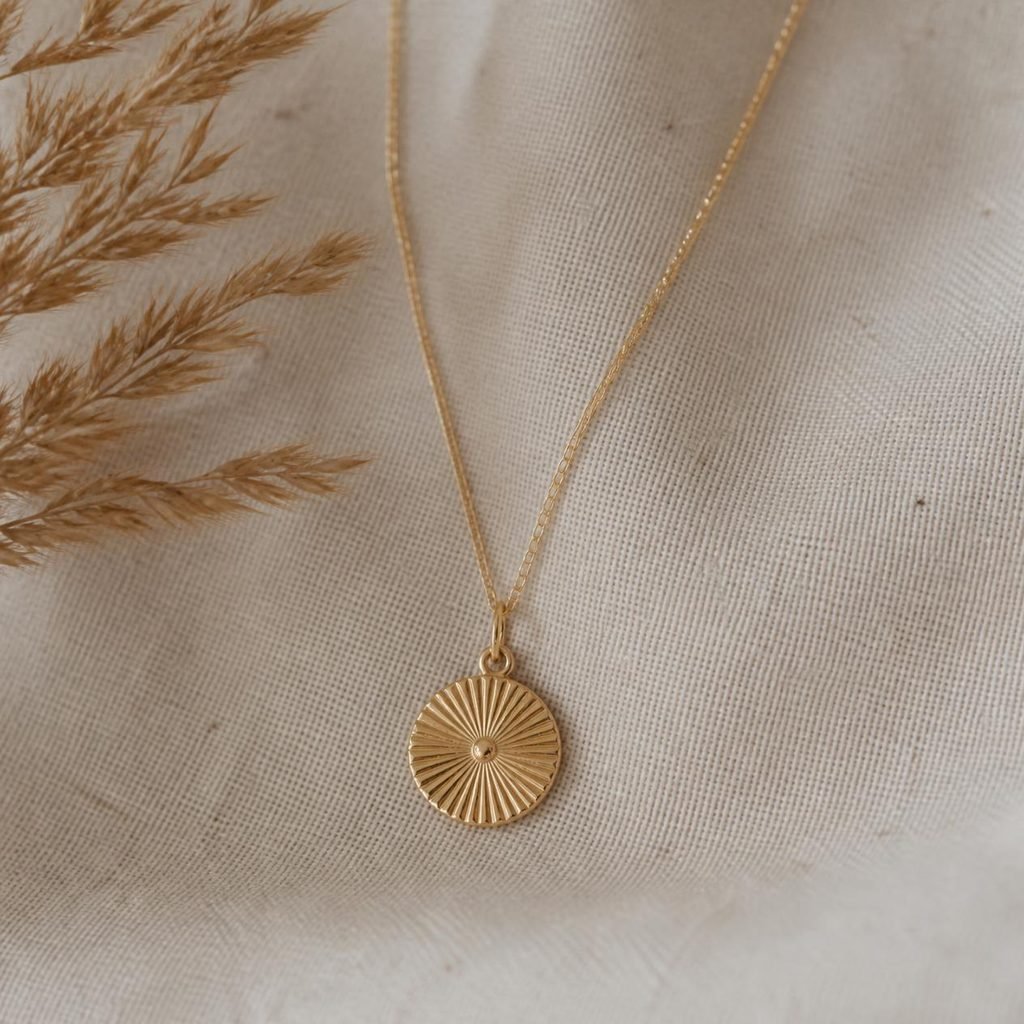
For the pendant, the one piece that carries a bit of personality, it’s worth spending more. A well-finished fine gold pendant necklace with a solid bail and a properly weighted charm will read as considered rather than flimsy.
How to Layer Without Overdoing It
Layering thin gold is mostly a spacing problem. Leave at least two inches between chain lengths so they don’t tangle or sit on top of each other. Two chains look intentional; three is the practical ceiling for most necklines.
Vary texture rather than thickness: a smooth cable chain next to a subtly twisted rope chain adds interest without adding bulk. And keep one layer plain. If every chain has a pendant, the effect stops being minimalist.
The same logic applies to rings. Two or three thin bands spread across different fingers read cleaner than a full stack on one finger.
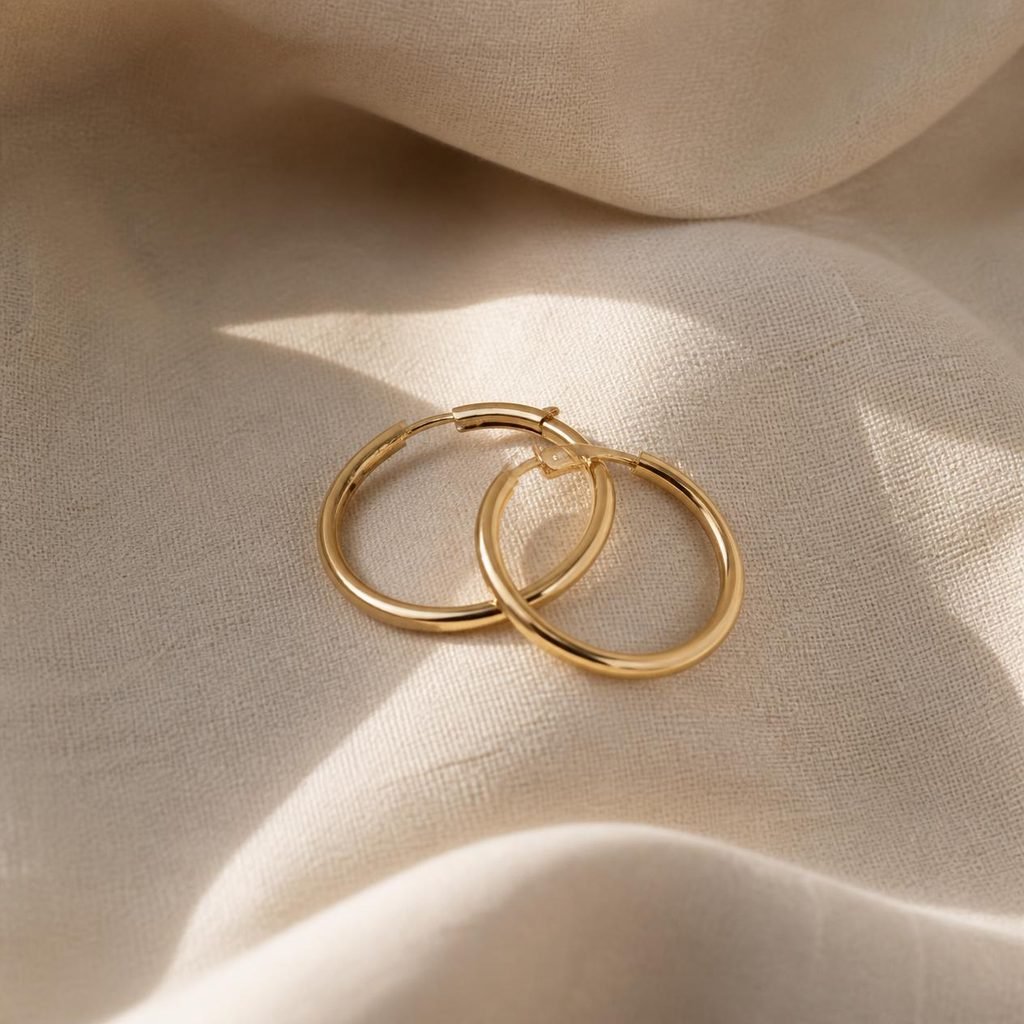
For earrings, small huggies handle both casual and formal wear. A pair of thin gold huggie hoops in 10–12mm is small enough for daily wear but still visible.
Caring for Delicate Gold
Minimalist gold jewelry relies on thinner, more delicate construction, so it’s more vulnerable to bending and snapping than heavy pieces, and the habits matter more.
- Take necklaces off before sleeping: most breaks happen overnight
- Store chains flat or hanging, never coiled in a pile
- Put jewelry on last, after perfume, lotion, and hairspray
- Clean with warm water, a drop of mild dish soap, and a soft brush
- Have solder joints checked if a chain starts to feel loose
Delicate chains can usually be repaired by a jeweler for a modest fee, so a snapped necklace isn’t automatically a loss.
FAQ
Is minimalist gold jewelry worth the investment?
Generally yes, if you buy solid gold rather than plated. Thin solid gold pieces cost less than heavy ones simply because there’s less metal, which makes them one of the more accessible ways to own real gold. They also stay wearable across trend cycles.
Can I wear delicate gold jewelry in the shower?
Solid gold won’t be damaged by water, but soap residue builds up in chain links and dulls the shine over time. Chlorine and saltwater are more of a concern and can weaken solder joints. It’s simplest to take pieces off first.
How do I stop thin chains from tangling?
Store each chain separately: a small pouch or a hook works better than a shared box. When layering, use clearly different lengths, and consider a layering clasp that holds two chains at a fixed distance behind the neck.
Building It Slowly
A minimalist gold jewelry capsule is a slow project, and that’s the point: each piece earns its place. If you want to explore the other end of the spectrum, browse our Necklaces category, or head to Care & Authenticity for more on keeping delicate gold in good shape.