
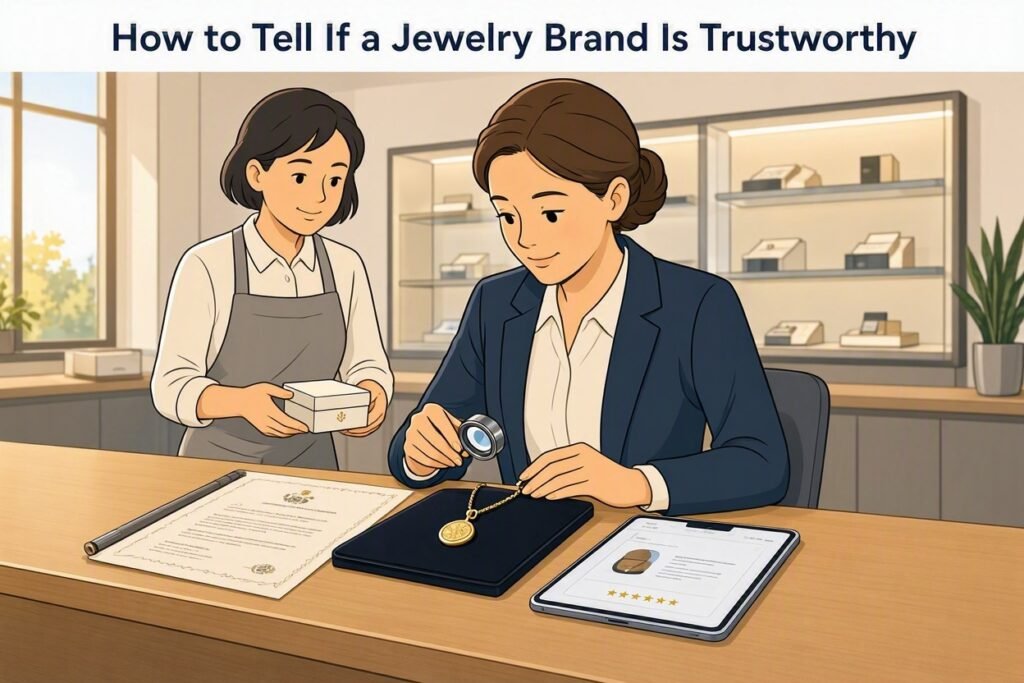
Buying gold online means trusting a company you’ve never met with a purchase you can’t hold first. The good news is that trustworthy jewelry brands leave a trail of evidence — in how they describe metal, how they handle returns, and how they talk about price. This guide walks through the specific signals worth checking before you enter your card details, plus the red flags that should make you close the tab.
Why Trust Matters More With Jewelry Than Most Purchases
With most online shopping, a bad purchase means a mild annoyance and a return label. Gold is different. The difference between solid 14K and a thin gold plating isn’t visible in a product photo, but it can be the difference between a piece that lasts thirty years and one that turns your wrist green in three months.
Gold jewelry also tends to be bought for occasions — engagements, birthdays, graduations. That emotional weight makes people move faster and check less. Slowing down for ten minutes of verification is usually the highest-value thing you can do.
Signal 1: The Metal Description Is Specific
This is the fastest filter, and it eliminates a surprising number of sellers. The FTC’s consumer guide on buying gold jewelry lays out exactly what sellers are legally required to disclose.
What clear labelling looks like
A trustworthy jewelry brand tells you exactly what you’re buying:
- Karat purity stated plainly — 10K, 14K, 18K, or 24K. For reference, 24K is roughly 99.9% gold, 18K is 75%, 14K is 58.3%, and 10K is 41.7%.
- Solid vs. plated vs. filled, clearly distinguished. In the US, “gold filled” must legally contain at least 1/20 (5%) gold by weight — meaningfully more than plating, which is often measured in microns.
- Gram weight listed, especially for chains. Weight is what separates a substantial piece from a hollow one at the same karat.
Vague phrases worth questioning
Terms like “gold tone,” “gold finish,” “18K gold bonded,” or simply “gold color” are not purity claims. They may describe attractive, perfectly legitimate fashion jewelry — but if a listing uses that language while pricing itself like solid gold, that gap is the warning.
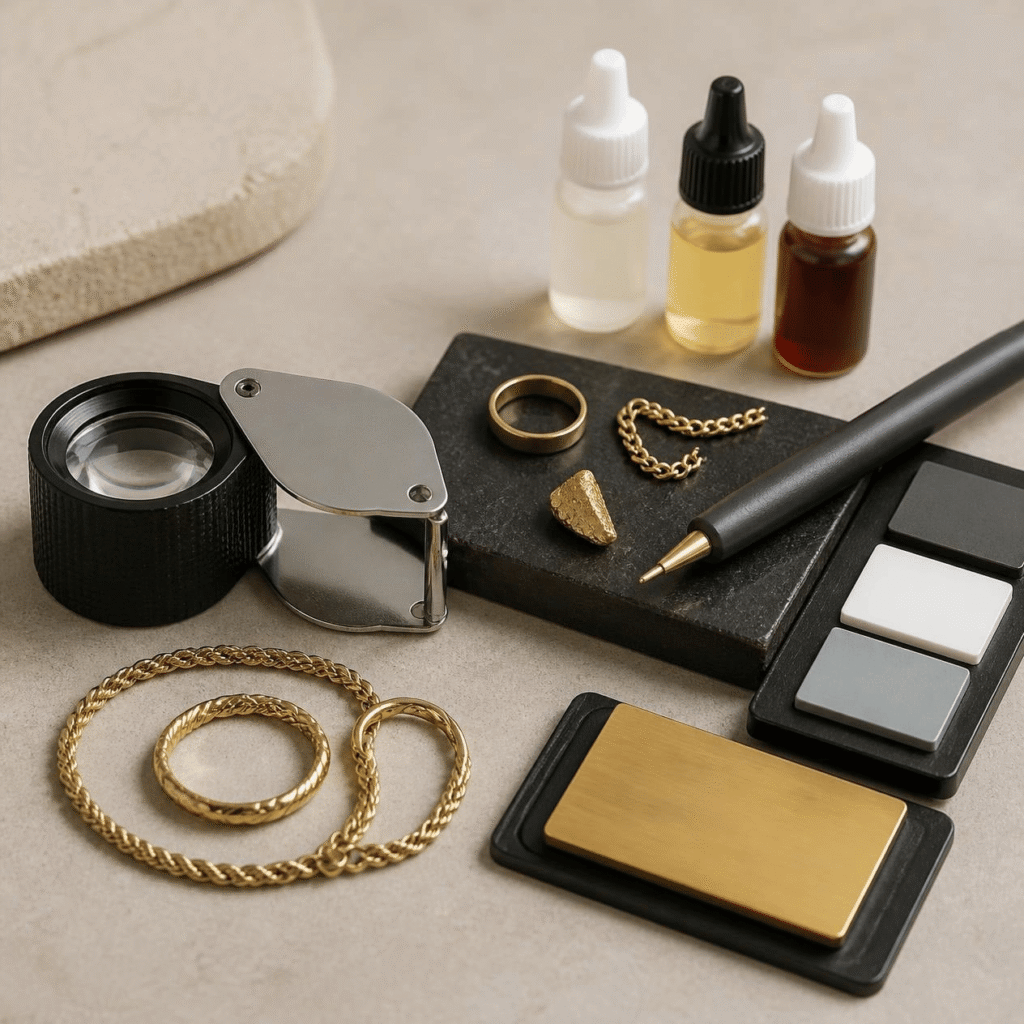
If you buy gold regularly, a basic testing kit and a 10x jeweler’s loupe pay for themselves the first time they save you from a bad purchase. A gold testing kit with a loupe lets you check hallmarks and acid-test a piece at home.
Signal 2: Hallmarks and Independent Verification
A hallmark is a small stamp on the clasp, inner band, or back of a piece indicating metal purity. Look for numbers like 585 (14K), 750 (18K), or 375 (9K).
In the UK, hallmarking by an official assay office is a legal requirement for gold items above one gram — which makes it a genuinely strong signal for British sellers. In the US there’s no equivalent assay system, but the FTC does require that karat markings be accurate, so a stamped piece carries real regulatory weight.
The question to ask a brand: do they mention hallmarking at all? Brands confident in their materials tend to talk about it unprompted.
Signal 3: The Policies Are Boring and Detailed
Boring is good. Read the fine print for:
- Return window and who pays return shipping. A 30-day window with free returns signals confidence. “Final sale on all items” on a $400 necklace does not.
- Resizing policy for rings — offered, and at what cost.
- Warranty or repair terms, with a stated duration.
- A real physical address and a working contact method that isn’t only a contact form.
Vague or missing policies aren’t proof of anything dishonest. But they tell you what happens if something goes wrong: nothing.
Signal 4: How the Brand Talks About Price
Honest pricing is explainable. If a brand can tell you why a piece costs what it does: gram weight, karat, craftsmanship, stone quality, the number starts to make sense.
Be cautious with permanent discounting. A site where everything is “70% off” year-round isn’t running a sale; it’s running a pricing strategy. The same goes for countdown timers that reset when you refresh the page.
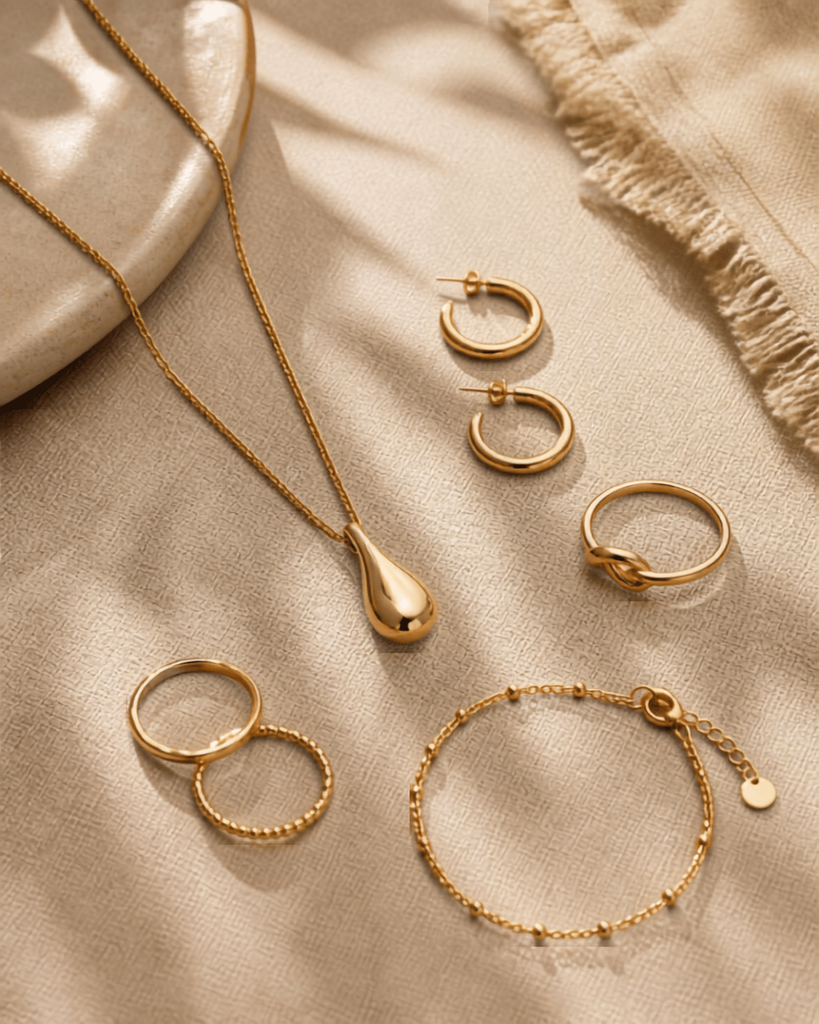
Use a well-established retailer as a practice run for this checklist. Browse a solid gold jewelry collection on Amazon and work through the questions above: is the karat stated? The weight? The return terms? Running the exercise on a considered, higher-end catalogue makes it much easier to spot what’s missing when you check a smaller or unfamiliar brand.
Signal 5: Reviews, Read Properly
Star ratings are close to meaningless on their own. What’s useful:
- Reviews mentioning the piece months later. “Still no tarnish after a year” is worth more than fifty “arrived fast” comments.
- How the brand replies to negative reviews. A specific, non-defensive reply is a good sign. Copy-pasted apologies are not.
- Photo reviews from real customers, which reveal the actual finish and scale.
- Off-site opinions — Reddit threads and forums surface complaints that never make it onto a brand’s own site.
Quick Red Flag Checklist
Walk away, or at least slow down, if you see:
- No karat or gram weight listed anywhere
- No physical address or company details
- “Final sale” on expensive pieces
- Prices far below market for the stated gold weight
- Stock photos only, with no real product photography
- A domain registered very recently with a huge catalogue
Trustworthy Jewelry Brand FAQ
Does a hallmark guarantee a piece is real gold?
No. Hallmarks can be faked, though it’s uncommon on reputable platforms. A hallmark is strong supporting evidence rather than proof on its own — combine it with a credible seller, sensible pricing for the weight, and a return policy that lets you verify independently.
Is expensive jewelry always more trustworthy?
Not necessarily. Price reflects brand positioning, marketing, and retail markup as well as materials. A modest brand that clearly states 14K and gram weight is a safer purchase than an expensive one that says only “gold finish.”
How can I verify a brand before ordering?
Check for a physical address and company registration, look up the domain’s age, search the brand name alongside “review” and “complaint,” and confirm the return policy is written out in full. If the brand sells through an established affiliate network or marketplace, that adds a layer of accountability.
Before You Buy
Trust in jewelry is rarely about one dramatic red flag — it’s about whether the small details line up. Specific metal descriptions, visible hallmarks, boring detailed policies, explainable pricing, and reviews with substance behind them. When several of those are missing at once, that’s your answer.
For more on protecting a purchase you’ve already made, see our Care & Authenticity section, and browse Buying Guides for piece-by-piece advice on what to look for.