
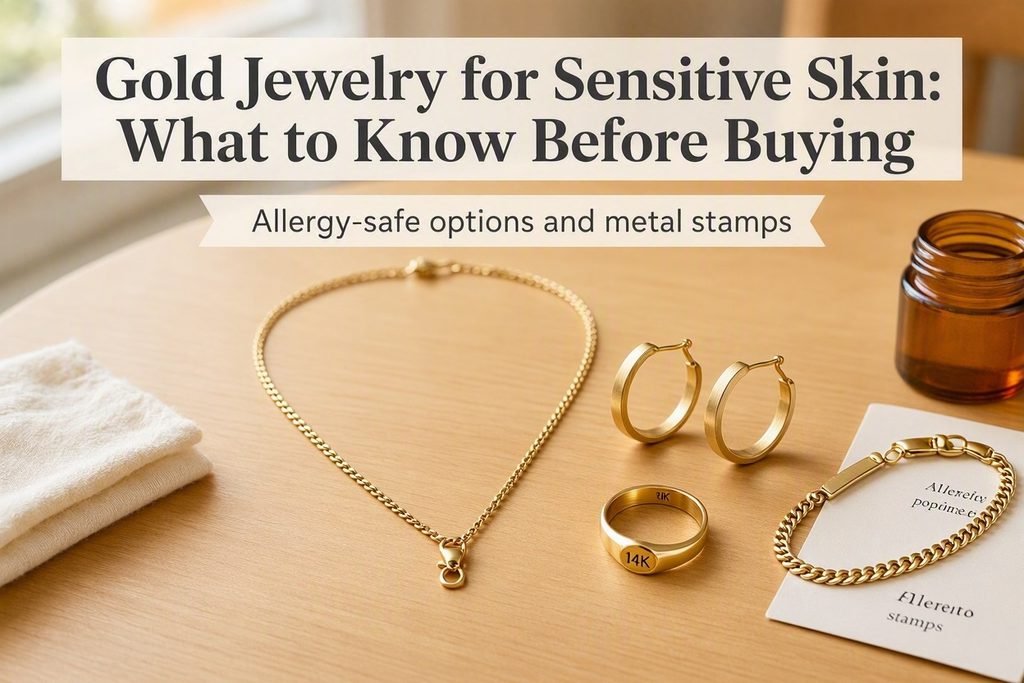
Gold jewelry for sensitive skin reactions are more common than you’d think. If gold jewelry leaves your skin red, itchy, or marked with a faint green line, you probably aren’t reacting to the gold at all. Most irritation comes from the other metals mixed into the alloy, which means the right piece can often solve the problem. Here’s how karat, color, and construction affect comfort, plus the habits that make a real difference day to day.
It’s Usually Not the Gold — It’s What’s Mixed In
Pure gold is a soft, chemically stable metal, and reactions to it are rare. The trouble is that pure gold is too soft for everyday jewelry, so it’s alloyed with harder metals: copper, silver, zinc, palladium, and — in many pieces — nickel.
Nickel is the common culprit. It’s one of the most frequent contact allergens worldwide, and it only needs to release a small amount onto damp skin to cause a reaction in someone who’s sensitised. Copper is a second, milder factor: it can react with sweat and leave that greenish tint on your skin, which is usually cosmetic rather than a true allergy.
For anyone managing gold jewelry for sensitive skin concerns, the more useful question isn’t just “is this gold,” but how much gold was actually in the piece, and what else was mixed in.
Karat Is the Number That Matters Most
Karat tells you the proportion of pure gold in an alloy. The higher the karat, the less room there is for anything else — including nickel.
- 24k — 99.9% gold. The most inert option, but very soft and easily dented.
- 22k — 91.7% gold. Still soft; common in South Asian and Middle Eastern jewelry.
- 18k — 75% gold. A good balance of durability and low alloy content. Often the sweet spot for sensitive skin.
- 14k — 58.3% gold. Durable and popular, but a larger share of alloy metals.
- 10k — 41.7% gold. The most alloy-heavy of the common karats, and the most likely to cause issues.
If 14k has bothered you in the past, moving up to 18k is the single most effective change you can make. You get noticeably less alloy against your skin without dropping to a karat that bends out of shape.
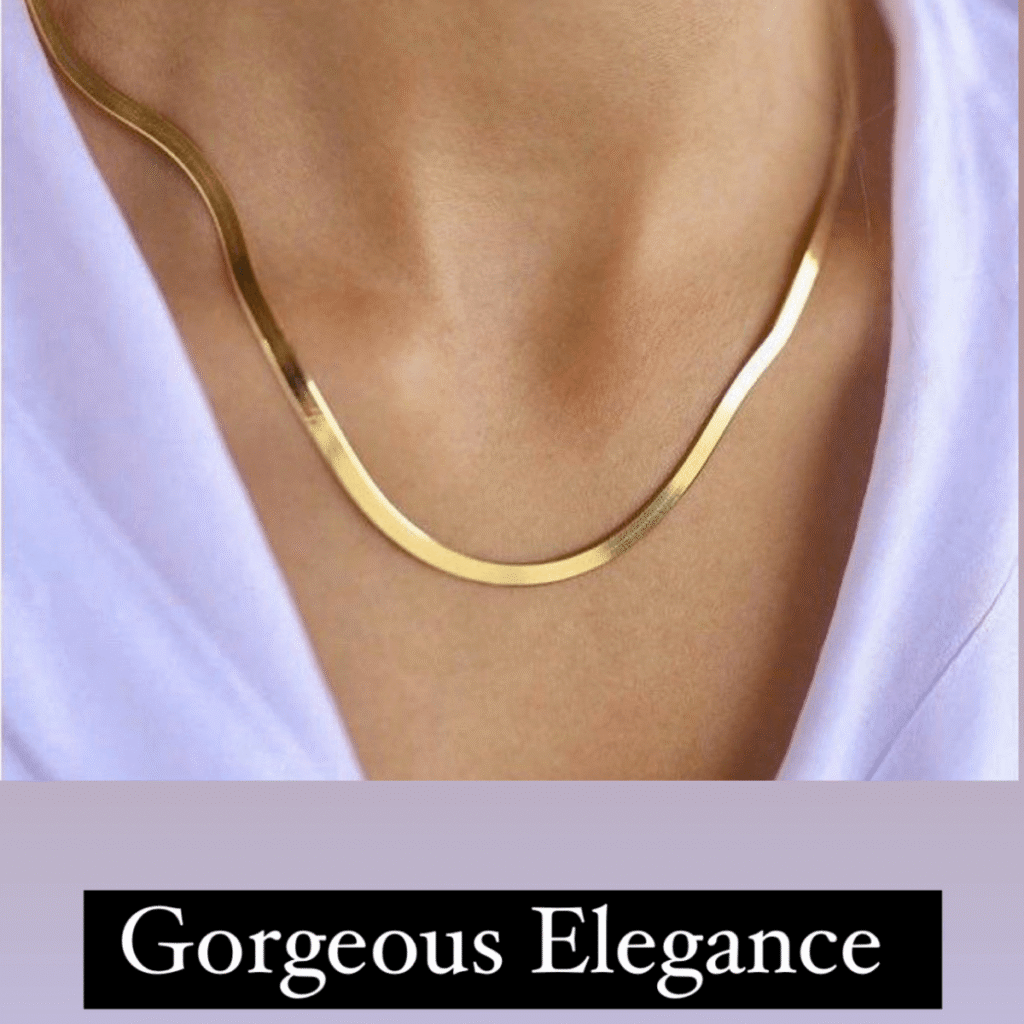
For pieces you plan to wear daily, it’s worth looking at a jeweller that publishes its alloy composition rather than just the karat stamp. Browse 18k gold pieces on Amazon if you want a higher-karat option built for regular wear.
Yellow, White, and Rose Gold Behave Differently
Yellow gold is alloyed mainly with silver and copper. At 18k, it’s generally the most forgiving choice for reactive skin.
White gold is where problems tend to show up. Its pale color comes from white metals added to the alloy, and historically that meant nickel. Many modern makers use palladium-based white gold instead, which is far kinder to sensitive skin — but you have to ask, because both are sold simply as “white gold.” White gold is also usually finished with rhodium plating; while that plating is intact it acts as a barrier, but as it wears down over a year or two, the alloy underneath comes back into contact with your skin. That’s why a white gold ring can feel fine for months and then start bothering you.
Rose gold gets its warmth from a higher copper content. Copper is not a common allergen, but if you’re prone to green marks or mild irritation from sweat, rose gold is more likely to show it than yellow gold of the same karat.
Solid Gold vs. Gold-Filled vs. Gold-Plated
Construction matters as much as color.
- Solid gold is gold alloy all the way through. What you test on day one is what you’ll be wearing in year five.
- Gold-filled has a thick, bonded layer of gold over a brass core. It holds up reasonably well and is a sensible middle ground on price.
- Gold-plated has a microscopically thin gold layer, often over brass or nickel-plated base metal. It wears through quickly, and once it does, your skin meets whatever is underneath.
If you react to jewelry, plated pieces are the first thing to rule out. A piece that “turned on you” after a few weeks was almost certainly plated.
Gold Jewelry for Sensitive Skin: Earrings Deserve Extra Attention
Earlobes are unforgiving. A piercing channel keeps metal in prolonged contact with broken-in but still delicate tissue, and it stays warm and slightly damp — the exact conditions that encourage metal ions to release.
Two things to check that people often overlook: the post and the back. A beautiful 18k hoop can come with a base-metal butterfly back, and that’s enough to cause a reaction. Ask whether the findings match the karat of the earring itself, or swap in solid gold backs separately.

Replacement solid gold earring backs are inexpensive and solve a surprising number of complaints. Look at solid gold earring backs on Amazon before you give up on a pair you like.
Habits That Reduce Irritation
Material choice does most of the work, but wear habits close the gap.
- Keep pieces dry. Remove rings and bracelets before showering, swimming, or workouts. Moisture and salt speed up metal release.
- Let lotion and perfume dry first. Product residue traps sweat against the metal and builds up in settings and clasps.
- Clean regularly. Warm water, a drop of mild dish soap, and a soft brush is enough for most gold. Buildup behind a stone or inside a clasp is a frequent hidden irritant.
- Give your skin breaks. Rotating pieces rather than wearing one ring around the clock reduces continuous contact.
- Don’t sleep in new earrings longer than your piercer advises.

A basic non-abrasive cleaning kit makes this routine much easier to stick to. Shop gentle gold jewelry cleaning kits on Amazon.
What “Hypoallergenic” and “Nickel-Free” Actually Mean on a Label
“Hypoallergenic” isn’t a standardised, regulated claim in most markets — it’s a marketing description, and different sellers apply it differently. “Nickel-free” is more specific but still worth verifying, because some sellers mean the plating contains no nickel while the base metal does.
The EU restricts how much nickel jewelry intended for prolonged skin contact may release, which is why European-sourced pieces are often a safer bet. Elsewhere, the most reliable approach is simply to ask the seller for the alloy composition. A jeweller who can answer that question is usually one worth buying from.
When to Talk to a Professional
If a reaction is painful, spreading, blistering, or persistent after you remove the piece, see a doctor or dermatologist rather than experimenting further. Patch testing can identify exactly which metal is responsible, which turns future shopping from guesswork into a simple checklist. Nothing in this article is medical advice — it’s about narrowing down the jewelry side of the equation.
FAQ
Is 14k or 18k gold better for sensitive skin?
18k, in most cases. It contains 75% pure gold versus 58.3% in 14k, so there’s less alloy — and less potential nickel — touching your skin. 14k is still a reasonable choice if you’ve worn it comfortably before, and it’s more scratch-resistant.
Can you be allergic to pure gold itself?
It’s possible but uncommon. Gold allergy exists and is documented, but the large majority of “gold” reactions trace back to nickel or another alloy metal. If high-karat yellow gold also causes problems, that’s worth raising with a dermatologist.
Does white gold contain nickel?
Sometimes. Traditional white gold alloys used nickel to achieve the pale color, while many current pieces use palladium instead. Both are labelled simply “white gold,” so ask the seller directly. Also keep in mind that white gold’s rhodium plating wears down over time and can be reapplied by a jeweller.
Sensitive skin doesn’t mean giving up gold — it usually means being more specific about karat, alloy, and construction than the average shopper needs to be. For more on keeping your pieces in good condition, browse our [Care & Authenticity] guides, and if earrings are your main concern, [Gold Hoop Earrings: A Holiday Gift Guide] covers fit and finish in more detail.
Looking to shop? Browse solid gold jewelry on Amazon, and check the karat on each listing before you buy.