
Three necklaces can sit side by side in a shop, all the same warm shade of yellow, and still be worlds apart once you read the label. One might be gold plated, one gold filled, and one vermeil. The names sound interchangeable, but the amount of real gold, how long the finish lasts, and how your skin reacts can be completely different. This guide compares gold filled vs gold plated jewelry, plus vermeil, so you know exactly what you’re paying for.
Table of Contents
Why These Labels Are So Easy to Mix Up
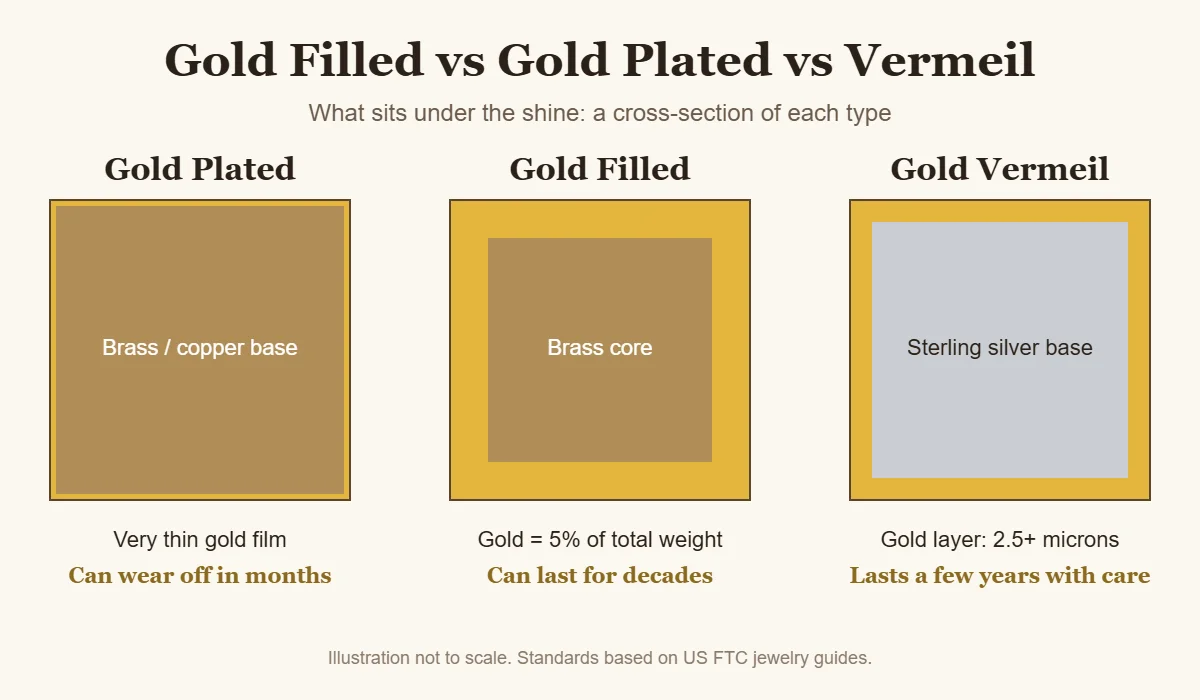
All three have one thing in common: none of them is solid gold. Each uses a layer of real gold over a different metal underneath. What changes is how thick that layer is, how it’s attached, and what sits beneath it.
Product listings rarely make this clearer. Titles often say “gold finish,” “18K gold coated,” or simply “gold,” and shoppers are left to guess. Once you know the three proper terms and what they’re supposed to mean, you can read a listing the way a jeweler would.
A quick note before going further. The thickness standards below come from the US Federal Trade Commission’s jewelry guides. Other countries set their own rules, so a UK or Australian listing may follow slightly different definitions. The general principles still hold everywhere.
Gold Plated: A Thin Coat Over Base Metal
Gold plated jewelry starts with an inexpensive base metal, usually brass or copper, sometimes stainless steel. The piece goes into a chemical bath, and an electric current deposits a very thin layer of gold onto its surface. This process is called electroplating.
Under US guidelines, a piece sold as “gold electroplate” needs a layer of at least 10K gold that is 0.175 microns thick. For perspective, a human hair is roughly 70 microns wide. A “heavy gold electroplate” label requires at least 2.5 microns. Anything thinner than 0.175 microns is usually described as “gold flashed” or “gold washed,” and that layer can start to wear off within weeks of regular use.
The appeal of plating is price. It lets you try a trend, a statement shape, or a bold chunky chain for a fraction of what solid gold would cost. The catch is lifespan. Friction, sweat, lotion, and water slowly wear the gold away, and once the base metal shows through, it can tarnish or leave a mark on your skin.
How long does gold plating last?
That depends on the thickness of the plating and on how you wear the piece. A thinly plated ring worn every day might show wear within a few months, since rings rub against everything your hands touch. A heavier plated pendant worn now and then can look good for a year or two. Earrings usually outlast rings and bracelets because they face far less friction.
Gold Filled: Far More Gold Than the Name Suggests
“Filled” makes it sound as if the gold is on the inside, but it’s the opposite. Gold filled jewelry is made by bonding a thick sheet of gold onto a base metal core, usually brass, using heat and pressure. That bonded material is then rolled or drawn into the sheet and wire used to make jewelry. This bonding step is the heart of the gold filled vs gold plated debate: one gets a thick, pressure-bonded layer, the other a thin electroplated film.
The key rule here is weight. To be sold as gold filled in the US, the gold layer must account for at least 1/20 of the item’s total metal weight, or 5 percent. That’s why you’ll often see stamps like “1/20 14K GF” or “14/20.” The gold itself is typically 12K or 14K.
In practice, gold filled pieces carry many times more gold than even heavy plating. The layer is thick enough that it doesn’t flake or rub off with normal wear, and with reasonable care a gold filled chain can keep its color for many years. It also copes well with everyday life, although chlorine and harsh cleaners are still best avoided.
Gold filled costs more than plated jewelry but far less than solid gold, which makes it a good middle ground for everyday basics like chains, hoops, and simple bracelets. Its main limit is design. Because the gold is bonded to sheet or wire before the piece is made, very detailed or sculptural shapes are harder to produce, so you’ll mostly find classic, simpler styles.
You may also come across “rolled gold” or “rolled gold plate.” It’s made the same way, just with a thinner gold layer, often 1/40 of the total weight. Its durability falls somewhere between plated and filled.
Gold Vermeil: Gold Over Sterling Silver
Vermeil (pronounced “ver-may”) is sterling silver coated with gold. In the US, a piece labeled vermeil must have a sterling silver base and a gold layer of at least 10K that is at least 2.5 microns thick. That puts vermeil on par with heavy plating, and well above standard plating.
The sterling silver base is the real advantage. If the gold eventually wears through, you see silver underneath rather than brass or copper. That means no green marks, and a piece that still holds some value on its own. Many people with sensitive skin also find vermeil more comfortable than plated jewelry with an unknown base metal.
Vermeil has trade-offs too. Silver tarnishes, so once the gold thins in high-friction spots, those areas can darken over time. It also costs more than plated jewelry, since silver is pricier than brass. On the plus side, a jeweler can re-plate vermeil when the finish fades, which gives it a much longer life than a cheap plated piece that ends up forgotten in a drawer.
Gold Filled vs Gold Plated vs Vermeil at a Glance
The table below puts gold filled vs gold plated side by side, with vermeil added for reference, so you can compare gold content, lifespan and price in seconds.
| Gold Plated | Gold Filled | Gold Vermeil | |
|---|---|---|---|
| Base metal | Brass, copper or steel | Usually brass | Sterling silver |
| Gold layer (US standard) | At least 0.175 microns | At least 5% of total weight | At least 2.5 microns |
| Typical lifespan | Months to a couple of years | Many years with care | Several years, can be re-plated |
| Sensitive skin | Depends on the base metal | Usually well tolerated | Usually well tolerated |
| Price | Lowest | Mid-range | Mid-range |
How to Read the Stamps
Hallmarks tell you a lot before you buy, or before you decide how to care for something you already own. These are the marks you’ll see most often:
- GP or GEP: gold plated or gold electroplate
- HGE or HGP: heavy gold electroplate
- GF, 1/20 14K GF or 14/20: gold filled
- RGP or 1/40: rolled gold plate
- 925 on a gold-colored piece: often vermeil, since 925 marks sterling silver
- 10K, 14K or 18K (or 417, 585, 750) with no other letters: usually solid gold
If a piece has no stamp at all, treat any “gold” claim with caution. Our guide on how to tell if gold jewelry is real walks through simple checks you can do at home.
Gold Filled vs Gold Plated: Which One Should You Buy?
The right choice depends less on which option is “best” and more on how you’ll actually wear the piece. When weighing gold filled vs gold plated, think about how often the piece will meet water, sweat, lotion and friction.
For something you’ll wear every day and rarely take off, like a simple chain or small hoops, gold filled usually gives the most value for the money. It handles daily life well and keeps its color.
For sensitive ears or skin, vermeil and gold filled are both safer bets than plated pieces with a mystery base metal. Earrings are where this matters most, since the post sits directly in the piercing.
For trend pieces you may only wear for a season, plated jewelry makes sense. There’s little point paying more for a shape you might not love next year.
For gifts, gold filled and vermeil strike a nice balance. They feel like real jewelry without the price of solid gold, and the person you give them to won’t be disappointed when the piece still shines six months later.
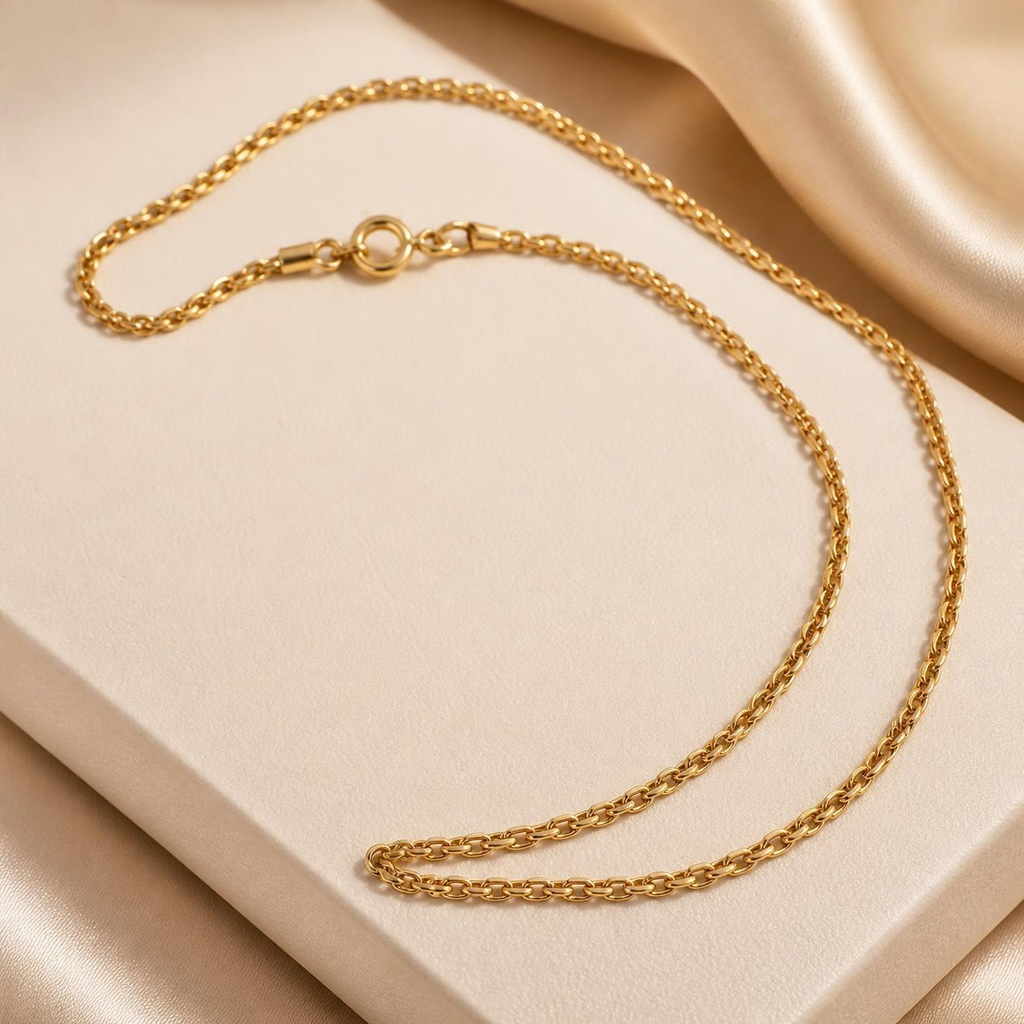
For a daily chain that holds up, this gold filled necklace on Amazon is a good example of what to look for. The listing states the gold content clearly, and simple styles like this are exactly where gold filled does best.
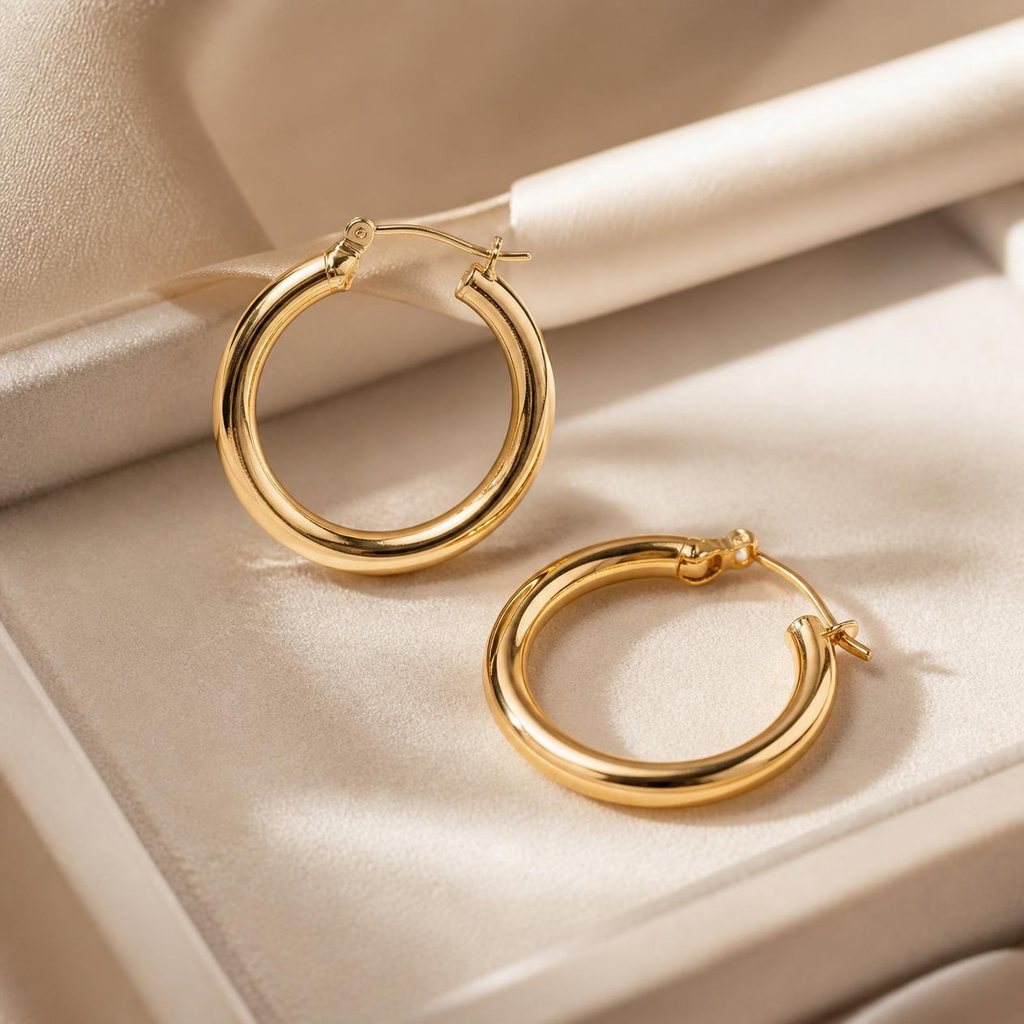
If your ears react to cheaper metals, these gold vermeil hoops on Amazon pair a sterling silver base with a gold layer, which makes them a gentler option than standard plated earrings.
When you shop on Amazon, read the full product description rather than just the title. Look for the exact words “gold filled,” “vermeil,” or “925 sterling silver,” and be careful with listings that only say “gold tone” or “18K gold” without any mention of plating or gold content.
Our take: if you only buy one piece, make it gold filled. For everyday wear, it offers the best balance between price and durability, and it won’t turn green after a few showers like most plated jewelry. Keep vermeil for earrings if you have sensitive ears, and treat gold plated pieces as occasional or trend-driven accessories rather than long-term investments.
Caring for Each Type
Care is where the gold filled vs gold plated difference shows up fastest. A plated piece can lose its color after a few careless weeks, while a gold filled chain usually forgives the occasional mistake.
Gold plated pieces need the gentlest handling. Wipe them with a soft, dry cloth after wearing, keep them away from water, perfume, and lotion, and store them separately so they don’t rub against harder pieces. Skip soaking and scrubbing, since both speed up wear on the plating.
Gold filled jewelry can be cleaned much like solid gold: a short soak in warm water with a drop of mild dish soap, a gentle pass with a soft brush, then a thorough rinse and dry. It’s still wise to take it off before swimming in a chlorinated pool.
Vermeil falls in between. Clean it with a soft cloth or a quick rinse in mild soapy water, dry it well, and store it in a small sealed bag to slow down silver tarnish. Avoid silver polishing cloths and dips, which can strip the gold layer.
For the full routine, see our guide on how to clean gold jewelry.
Frequently Asked Questions
Is gold filled better than gold plated?
For most everyday pieces, yes. In a straight gold filled vs gold plated comparison, gold filled carries far more gold, resists tarnish longer and is less likely to irritate skin. Gold plated makes sense for trendy pieces you only plan to wear occasionally.
Is gold filled better than vermeil?
Neither wins across the board. Gold filled usually contains more gold overall and tends to hold up better to daily friction, while vermeil has a precious metal base, so worn spots reveal silver instead of brass. For everyday chains, gold filled is often the more durable pick. For sensitive ears, both work well.
Can you shower with gold filled jewelry?
Occasional contact with water won’t harm gold filled jewelry, and many people wear it in the shower without trouble. Soap residue can dull the shine over time, though, so taking it off when you can is a good habit. Plated pieces should stay as dry as possible.
Is gold plated jewelry worth buying?
Yes, for the right purpose. It’s a sensible choice for trend pieces, occasional wear, or testing a style before spending more. Just keep your expectations realistic, and look for heavy plating or a stainless steel base if you want it to last longer.
The gold filled vs gold plated question really comes down to how much gold you are getting and how long you want it to last. Now that you know what sits under the shine, the next step is picking the right karat. Our guide to 14K vs 18K gold explains the difference, and our Buying Guides cover everything else you need before your next purchase.