
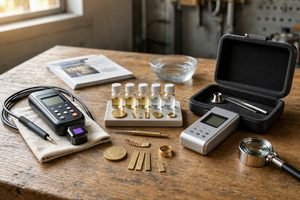
The best gold testing kit lets you check, at home and in a few minutes, whether a ring or chain is really the karat it claims to be. It earns its place for exactly the moments when a stamp is worn, a listing was vague, or a family piece came with no paperwork at all. Below you’ll find three kits for different budgets and skill levels, plus a step-by-step guide to using one safely, because a kit is only as good as the way you use it.
As an Amazon Associate I earn from qualifying purchases.
Why Keep a Gold Testing Kit at Home
You don’t need to be a jeweler to want peace of mind about a piece you already own. Maybe you inherited a ring with no paperwork, bought something secondhand, or just want to double-check a listing that seemed vague about karat content. A testing kit gives you a quick answer at home, without booking an appointment or paying for an appraisal every time you’re unsure.
That said, these kits work best as a first check. For anything high-value or sentimental, a professional jeweler’s opinion is still worth getting before you sell, insure, or make a big decision based on the result.
What to Look for in a Testing Kit
A few things make the difference between a kit that’s easy to use and one that leaves you guessing, especially once you understand how karat purity is measured:
- Karat coverage: most kits test 10K, 14K and 18K, which covers the vast majority of jewelry sold today. You only need 22K and 24K acids if you own high-karat pieces, which are more common in South Asian and Middle Eastern jewelry.
- Test stone quality: a durable, reusable stone matters more than it sounds, since a rough or thin one wears out fast.
- Clear instructions: acid testing has a small learning curve, so a simple, illustrated guide saves a lot of frustration.
- Extras: a loupe, gloves or a neutralizer can be worth the extra cost if you plan to test more than once or twice.
The Three Kits, Side by Side
| Best Overall | Best for Beginners | Best Budget | |
|---|---|---|---|
| Kit | Gold Silver Jewelry Tester Appraisal Kit | GTE Precious Metal Testing Kit with Loupe | Gold Testing Kit (Techneak) |
| Karats tested | 10K to 24K, plus silver, platinum, palladium | 10K, 14K, 18K, 24K | 10K, 14K, 18K |
| Extras | Test stone, multiple acid bottles | 30X eye loupe, wooden storage box, needle file, cloth | 2×2 test stone, illustrated instructions |
| Best for | Testing almost any precious metal | First-time testers | Occasional checks on everyday jewelry |
Prices and stock change often on Amazon, so check the current listing (and the karats it covers) before you buy.
Best Overall: Gold Silver Jewelry Tester Appraisal Kit
This is the most complete of the three. It covers gold from 10K all the way up to 24K, plus silver, platinum and palladium, which makes it useful well beyond everyday jewelry. If you want one kit that handles almost anything that comes through your door, this is the one to start with.
Good for: anyone who wants an all-purpose kit without paying extra for accessories they may not need.
Best for Beginners: GTE Precious Metal Testing Kit with Loupe
If you’ve never tested gold before, the extras in this kit make the learning curve a lot gentler. The 30X loupe lets you inspect hallmarks closely before you even reach for the acid, and the wooden box keeps everything organized instead of rattling around in a drawer. It’s the priciest of the three, but the added tools make it easier to get a confident read on your first try. We go into more detail in our GTE gold testing kit review.
Good for: first-time testers, or anyone who wants to check hallmarks and purity in the same sitting.
Best Budget: Gold Testing Kit by Techneak
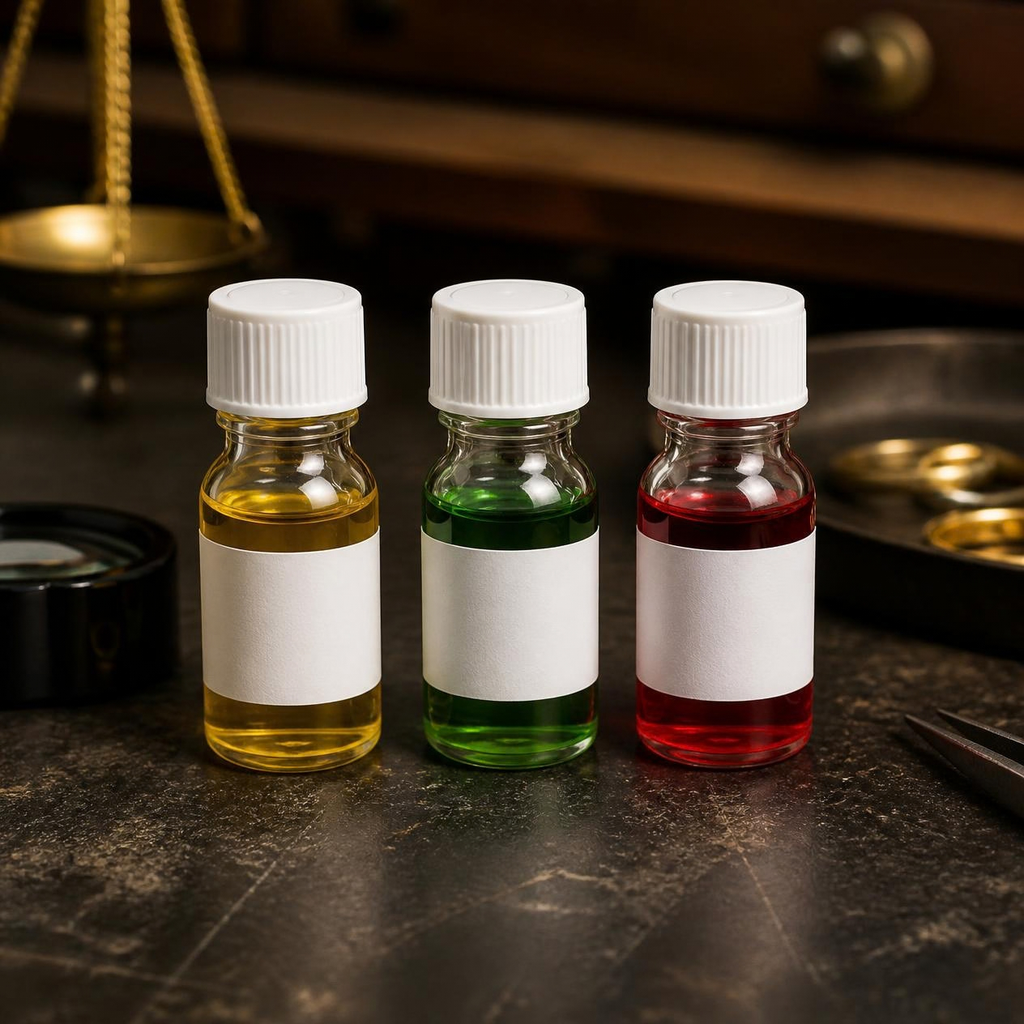
Not everyone needs a full toolkit. This kit strips things down to the essentials: three acid bottles (10K, 14K, 18K) and a test stone, with an illustrated booklet to walk you through it. It won’t cover 22K or 24K pieces, but for everyday jewelry at a lower price, it does exactly what it needs to.
Good for: occasional testers who just want a simple, no-frills option.
How to Use a Gold Testing Kit, Step by Step
Acid kits rely on a simple idea. Gold resists acids that dissolve lesser metals, and the higher the karat, the stronger the acid it can survive. By testing a small streak of metal against acids of increasing strength, you can see roughly where your piece sits.
- Set up safely. The bottles contain nitric acid, and the high-karat solutions also contain hydrochloric acid. Wear gloves and eye protection, work on a protected surface near an open window, and keep the kit well away from children and pets.
- Check the stamp first. Use a loupe to look for a mark like 14K or 585. It tells you which acid to start with, and our guide to gold stamps and what they mean covers the less obvious ones.
- Make a streak on the stone. Rub the piece firmly on the test stone using a hidden area, such as the inside of a ring band or the end of a chain near the clasp, until you have a solid line of metal.
- Apply acid, starting low. Put a drop of the 10K acid across the streak. If the streak stays put, the metal is at least 10K. Repeat with the 14K acid, then the 18K, each time on a fresh streak.
- Read the result. The karat where the streak starts to fade or dissolve is your ceiling. If it survives the 14K acid but disappears under the 18K, you’re most likely holding 14K gold.
- Clean up. Wipe the stone, rinse the jewelry under running water, dry it well and close the bottles tightly.
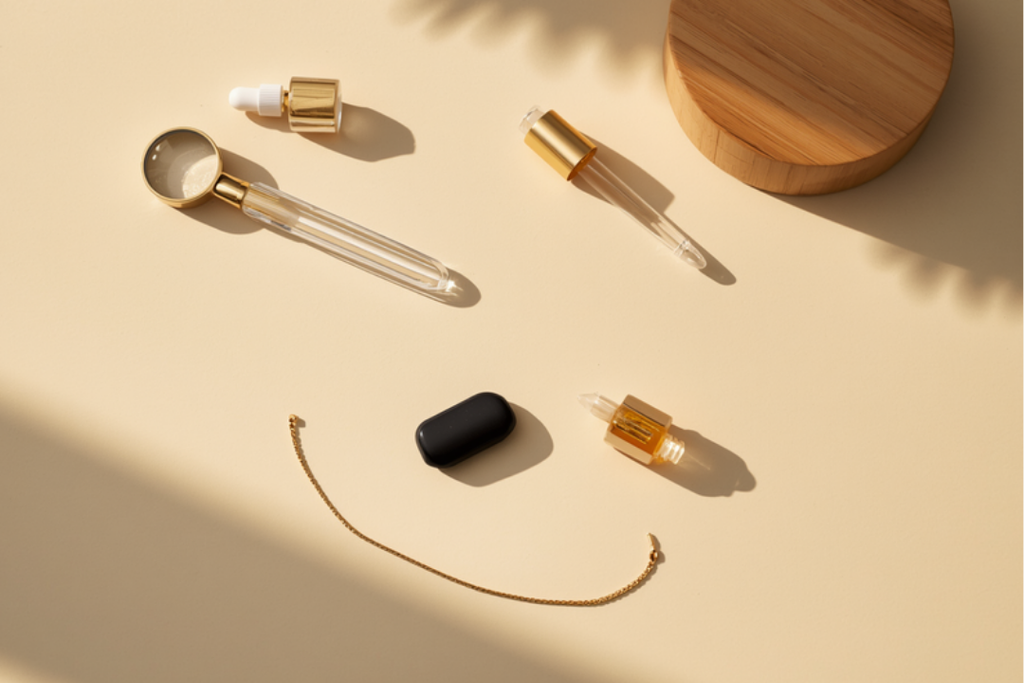
One habit makes a big difference: test a piece you already know is genuine right next to the unknown one. Seeing how a real 14K streak behaves under each acid makes the second result much easier to read, especially the first few times.
Where Acid Tests Fall Short
Thick plating and gold-filled pieces. A streak only scrapes the surface. On heavily plated or gold-filled jewelry, that surface layer is real gold, so the test can pass even though the core is brass. Jewelers get around this by filing a tiny notch in a hidden spot and testing the metal underneath. Only do that on pieces you’re happy to mark, and leave it to a professional on anything valuable. If the difference between these finishes is new to you, see gold filled vs gold plated vs vermeil.
White gold. Most white gold is coated in rhodium, which can make the streak harder to read. Testing on a less polished inner area usually gives a clearer line.
Karats that sit close together. An acid test gives you a range, not an exact number. Telling 18K from 20K, or a well-made 9K from 10K, is beyond what a home kit can do reliably.
Dirt and tarnish. A film of lotion or surface tarnish can leave a muddy streak. Give the piece a quick clean first, and if you’re not sure whether the darkening you see is tarnish at all, our guide to what tarnished gold looks like will help.
Acid Kit, Electronic Tester or Jeweler?
Acid kits are the cheapest route and work well for occasional checks on everyday jewelry. Electronic testers measure how the metal conducts electricity. They’re faster and leave no mark, but they cost considerably more and still struggle with plated pieces.
The most accurate option is an XRF analyzer, which reads the metal’s composition without touching it. You won’t own one, but many jewelers and gold buyers do, and they can test a piece in a minute or two. A sensible split: use a home kit to sort through a jewelry box or check a secondhand find, and take anything valuable, sentimental or headed for sale to a jeweler for a second opinion.
Which One Should You Choose?
If you test jewelry once in a while and want something dependable, the Gold Silver Jewelry Tester Appraisal Kit is the safest pick thanks to its wide karat range. If you’re new to gold testing and want extra tools to build confidence, go with the GTE kit with loupe. And if you just need a quick, occasional check without spending much, the Techneak kit covers the basics. The best gold testing kit is simply the one that matches how often you’ll actually use it.
Frequently Asked Questions
Are at-home gold testing kits accurate?
They’re reliable for a quick check when used carefully, but they give you a karat range rather than an exact figure, and they can be fooled by thick plating. For high-value pieces, have a jeweler confirm the result.
Do gold testing kits work on gold-plated jewelry?
Often, but not always. Thin plating usually wears through on the stone, and the streak dissolves in the 10K acid. Thick plating and gold-filled pieces can pass a surface test, which is why testing a tiny notch in a hidden spot gives a more honest answer.
Is gold testing acid dangerous?
It’s corrosive, so treat it with care: gloves, eye protection, good ventilation, and storage out of reach of children. If a drop lands on your skin, rinse it right away with plenty of water.
If you’re still at the “is this real?” stage, start with our guide on how to tell if gold jewelry is real. And if it’s the stamp that’s confusing you, gold stamps decoded explains what 14K, 585 and GF actually mean.

Pingback: GTE Gold Testing Kit Review: 5 Things to Know Before Buying