
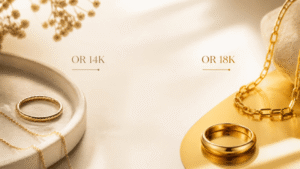
14K vs 18K Gold : If you’ve started shopping for gold jewelry, you’ve probably noticed that most pieces are labeled either 14K or 18K. Both are real, solid gold — but they differ in purity, durability, price, and even color. Here’s how to decide which one actually fits your lifestyle and budget.
14K vs 18K Gold : Why This Choice Actually Matters
It’s easy to assume “more gold is always better,” but that’s not quite right once you factor in how and where you’ll actually wear a piece. The karat you choose affects not just the price tag, but how well a piece holds up over years of wear, and whether it fits seamlessly into your everyday routine or feels better reserved for special occasions. Getting this right upfront saves you from buying a piece that looks great in the store but doesn’t match how you’ll actually use it.
The Core Difference: Purity
Gold purity is measured in karats out of 24. The number tells you how much of the piece is actual gold versus other metals mixed in for strength.
- 18K gold is 75% pure gold, mixed with 25% other metals (like copper or silver)
- 14K gold is about 58% pure gold, mixed with roughly 42% other metals
That difference might sound small, but it affects almost everything about how the piece looks, wears, and costs.
Durability: 14K Often Wins for Everyday Wear
Because 14K gold contains more alloy metals, it’s harder and more scratch-resistant than 18K. If you’re looking for a piece you’ll wear daily — a stacking ring, an everyday chain — 14K generally holds up better to bumps, scratches, and general wear over the years.
18K gold, being softer, is better suited to pieces you’ll wear occasionally or treat more carefully, like a statement necklace for special occasions.
Color Differences
The metals mixed into gold affect its final color:
- 18K gold tends to have a richer, deeper yellow tone, closer to what people picture as “classic gold”
- 14K gold has a slightly lighter, more muted tone, and often shows a bit more of whatever alloy was used (giving it a subtle rose or pale tint depending on the mix)
If a deep, warm gold color matters most to you, 18K will usually deliver that more consistently.
Price: 14K Is the More Budget-Friendly Choice
Since 18K contains significantly more actual gold, it costs noticeably more than 14K for a similarly sized piece. If you’re building a jewelry collection on a budget, or buying multiple pieces to stack and layer, 14K lets you get more pieces for the same spend without sacrificing durability.
Which Should You Choose?
Go with 14K if:
- You want a piece for daily wear
- You’re mindful of budget
- You’re buying multiple pieces to layer or stack
Go with 18K if:
- You want a deeper, richer gold color
- The piece is for special occasions rather than daily wear
- You’re buying a statement piece where quality and richness of color matter most
Both are genuine, solid gold — there’s no wrong choice here, just a better fit depending on how and how often you plan to wear the piece.
Ready to shop? Check out our necklace guides and ring guides for karat-labeled recommendations in both 14K and 18K.
Frequently Asked Questions
Is 18K gold worth the extra cost? It depends on how you’ll wear the piece. For special-occasion jewelry or pieces you want in the richest possible gold tone, the extra cost is often worth it. For daily wear where durability matters more, 14K usually offers better value.
Does 14K gold tarnish? Solid 14K gold won’t tarnish the way gold-plated jewelry does, though it can develop a slightly duller surface over time with heavy wear — a quick polish restores its shine.
Can I wear 14K and 18K pieces together? Yes, without any issue. The color difference is subtle enough that mixing both karats in the same outfit or stack looks intentional rather than mismatched.
💛 Want the full picture beyond just karats? Our free Ultimate Guide to Choosing Gold Jewelry covers colors, pricing, and care too — download it here.
Looking to shop? Browse 18K solid gold jewelry on Amazon.

Pingback: Gold Jewelry Trends to Watch in 2026 - Vicksan Gold
Pingback: Gold vs Rose Gold vs White Gold: What's the Difference?
Pingback: What Does Tarnish Gold Look Like? Easy Guide to 4 Gold Types