
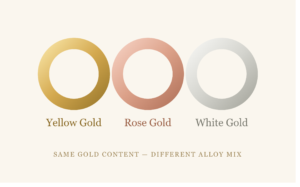
Gold vs. Rose Gold vs. White Gold. Walk into any jewelry section and you’ll see the same piece offered in three different colors: yellow, rose, and white. They’re often the same design, the same karat, even the same price — so the choice usually comes down to what actually looks and wears best for you. Here’s what sets them apart.
They’re All “Real” Gold
This is the part that trips people up: rose gold and white gold aren’t separate metals from yellow gold. All three start as pure gold, and the color comes entirely from which metals are mixed in during the alloying process. A ring labeled 14K in any of the three colors contains the same 58% pure gold — just combined with different alloy metals.
Yellow Gold
Yellow gold is the closest to gold’s natural, unaltered color, typically mixed with silver and copper. It’s the classic, most traditional option, and tends to complement warmer skin tones especially well, though it genuinely works across most skin tones.
Rose Gold
Rose gold gets its pink-toned color from a higher proportion of copper in the alloy mix. The more copper used, the deeper and more pink the tone. It’s a relatively modern favorite, often associated with a romantic, feminine aesthetic, and tends to suit cooler and fairer skin tones particularly well, though like yellow gold it’s genuinely flattering on most people.
White Gold
White gold is created by mixing gold with white metals like palladium or nickel, then usually finished with a rhodium plating for extra shine and durability. This is an important detail: that rhodium layer wears off over time with regular use, meaning white gold jewelry typically needs to be re-plated every year or two to maintain its bright white finish — something worth knowing before you buy, since it’s an ongoing cost the other two colors don’t have.
Which One Should You Choose?
Choose yellow gold if:
- You want the most classic, timeless option
- You prefer minimal maintenance (no re-plating needed)
- You’re drawn to warmer tones
Choose rose gold if:
- You want something a little more distinctive without being bold
- You like a softer, romantic aesthetic
- You want low maintenance, since rose gold doesn’t require re-plating either
Choose white gold if:
- You specifically love the bright, silvery look
- You don’t mind occasional re-plating to maintain the finish
- You’re matching an existing piece (like an engagement ring) already in white gold
Can You Mix Colors?
Yes, and it’s increasingly common. Mixing yellow, rose, and white gold pieces in the same stack or layered look has become a popular styling choice rather than something to avoid — it reads as intentional rather than mismatched, especially when the pieces share a similar style or era.
Gold vs. Rose Gold vs. White Gold. Frequently Asked Questions
Does one gold color last longer than the others? Yellow and rose gold generally require less maintenance since they don’t rely on a plating layer, while white gold needs periodic re-plating to keep its bright finish, making it slightly higher-maintenance over time.
Is white gold hypoallergenic? Not always — some white gold alloys contain nickel, which can cause reactions in people with metal sensitivities. If you have sensitive skin, look for nickel-free white gold or consider palladium-based alloys instead.
Is rose gold more expensive than yellow gold? Generally not — the price difference between gold colors comes down to the karat and gold content, not the color itself, since all three use the same base amount of pure gold at a given karat.
💛 This is just one piece of the puzzle Grab our free Ultimate Guide to Choosing Gold Jewelry for the complete buying breakdown — karats, colors, pricing, and care all in one place.
Curious which karat to pair with your color choice? Check out our guide on 14K vs 18K gold to round out your buying decision.

Pingback: How to Layer Gold Necklaces (Without It Looking Cluttered)