
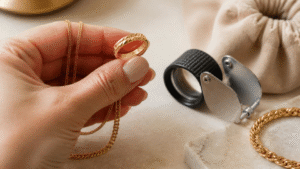
If you’ve ever bought a “gold” necklace online only to see it turn green after a week, you’re not alone. A huge share of the jewelry sold today is gold-plated or gold-filled rather than solid gold — and unless you know what to look for, it’s genuinely hard to tell the difference just by looking at a photo. The good news is that spotting real gold jewelry doesn’t require a jeweler’s toolkit. A few simple checks can save you from a disappointing purchase.
Why It’s Hard to Spot Fake Gold
Gold-plated jewelry is made by coating a base metal (often brass or copper) with a thin layer of real gold. Fresh out of the box, it can look identical to solid gold — same shine, same color, same weight in photos. The differences only show up over time (tarnishing, fading) or under closer inspection, which is exactly why it pays to check before you buy, not after.
Check the Hallmark
The single fastest way to verify gold is to look for a hallmark — a tiny stamp usually found on the clasp of a necklace or bracelet, or the inside band of a ring.
What the Numbers Mean
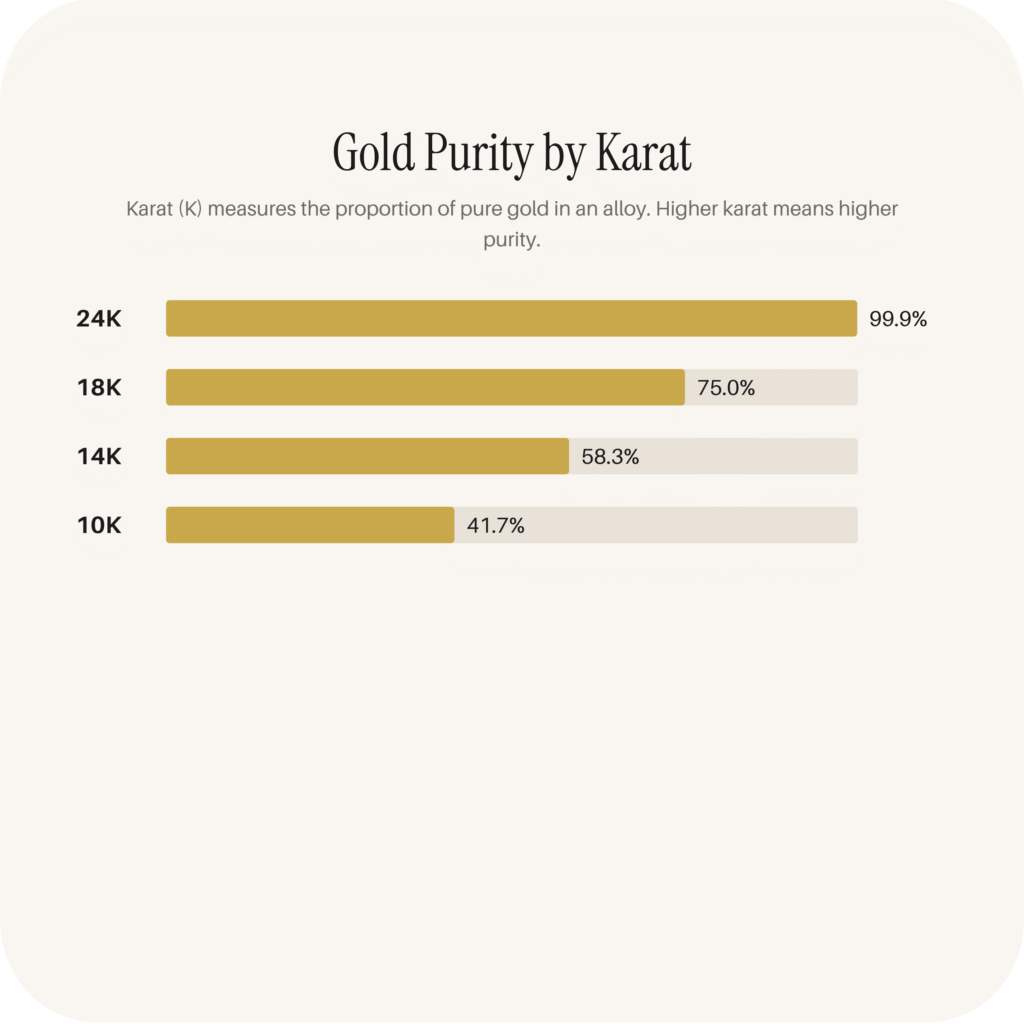
Gold purity is measured in karats (K), out of a maximum of 24:
- 24K — pure gold (very soft, rarely used in everyday jewelry)
- 18K — 75% gold, durable enough for daily wear, a common choice for fine jewelry
- 14K — about 58% gold, one of the most popular choices in the US for its balance of durability and price
- 10K — the minimum legally sold as “gold” in the US, more affordable but lower gold content
If a piece has no hallmark at all, that’s a red flag. Reputable sellers stamp their gold jewelry clearly — it’s one of the easiest ways to confirm what you’re actually buying.
Simple At-Home Tests
If you already own a piece and want to check it, here are a few low-risk tests you can try at home.
The Magnet Test
Gold is not magnetic. Hold a strong magnet near the piece — if it’s pulled toward the magnet, the item likely contains a significant amount of base metal rather than being solid gold. Keep in mind this test isn’t perfect on its own, since some fake gold pieces use non-magnetic metals too, but a strong pull is a clear warning sign.
The Vinegar Test
A drop of white vinegar on a small, hidden part of the piece can help: real gold won’t change color when exposed to vinegar, while plated or fake pieces often darken or discolor within a few minutes. Rinse and dry the item afterward.
The Skin Discoloration Test
Real gold generally won’t leave marks on your skin, even after sweating or getting wet. If a piece consistently leaves a green or black residue on your skin, it’s a strong sign the item is plated rather than solid gold.
None of these tests are 100% conclusive on their own, but combined with a hallmark check, they’ll give you a solid picture of what you’re actually wearing.
Buying From a Trusted Source
The simplest way to avoid the guesswork altogether is to buy from sellers who are upfront about gold content and offer tools to verify it.
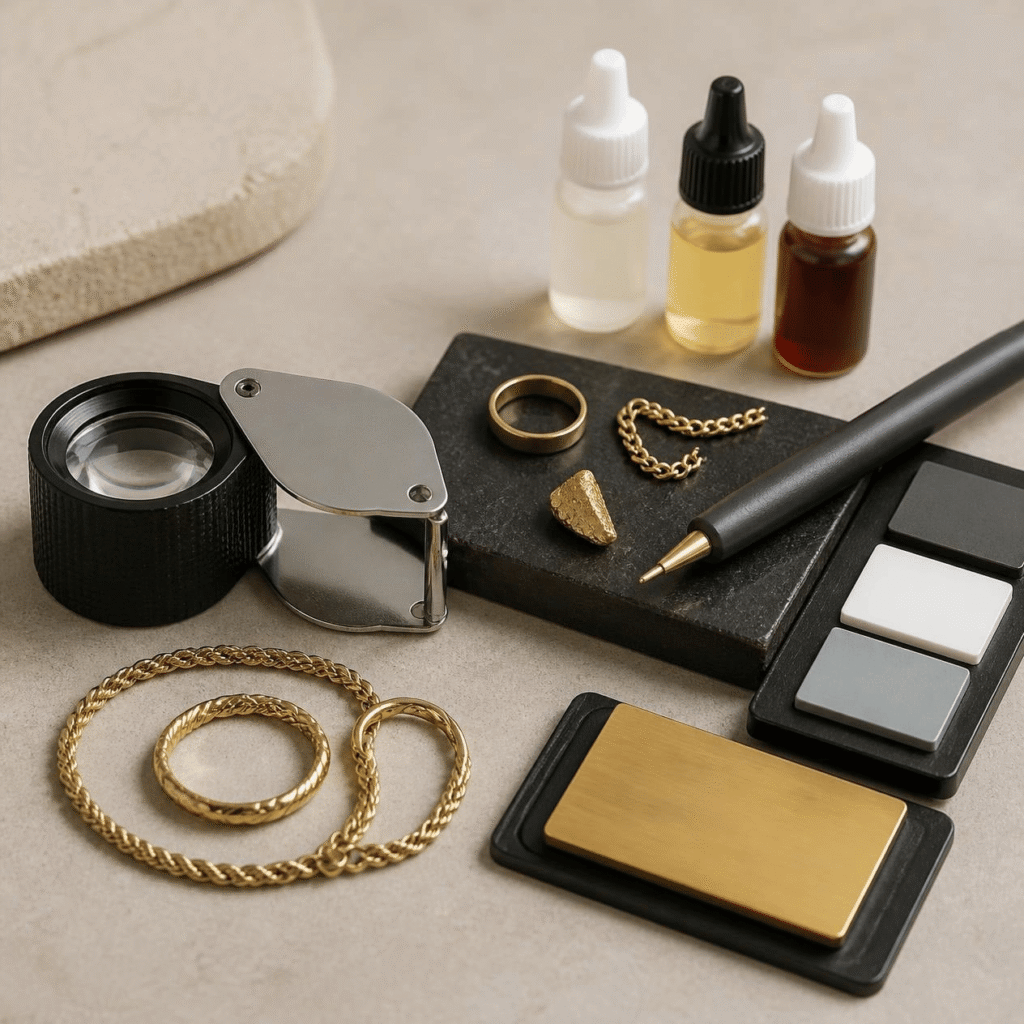
If you want to double-check jewelry you already own, a compact gold testing kit is an easy investment — makes it simple to test purity at home without guesswork.
When shopping for new pieces, look for sellers that clearly state the karat on every listing rather than vague terms like “gold-tone” or “gold finish.” On marketplaces like Amazon, stick to listings sold or fulfilled by Amazon when possible, and check that the seller has a solid volume of reviews, not just a handful of five-star ratings. A lack of reviews, no way to contact the seller, or a pattern of complaints about mismatched descriptions are all signs to walk away, no matter how good the photos look.
Final Thoughts
Real gold doesn’t have to be a mystery. Checking the hallmark, running a couple of simple tests, and buying from transparent sellers will cover you in almost every situation. Once you’re confident in what you’re buying, you can focus on the fun part — choosing pieces that actually fit your style.
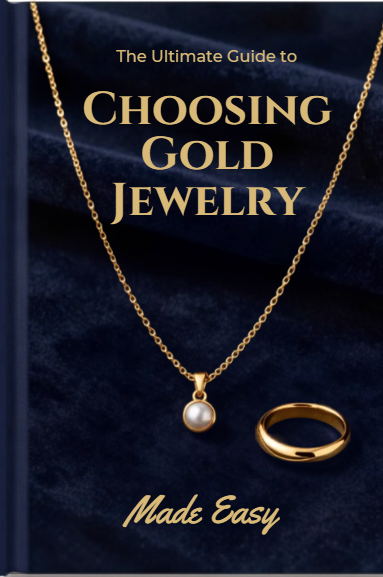
💛 Want the complete gold jewelry buying guide? For a deeper dive into everything gold — not just spotting real from fake — grab our free Ultimate Guide to Choosing Gold Jewelry, covering karats, gold colors, pricing, and care in one place.
Looking for your next piece? Check out our guides on necklaces and bracelets to find gold jewelry worth adding to your collection.
Looking to shop? Browse our curated picks at our gold jewelry storefront.

Pingback: How to Clean Gold Jewelry (So It Lasts) - Vicksan Gold
Pingback: GTE Gold Testing Kit Review: 5 Things to Know Before Buying