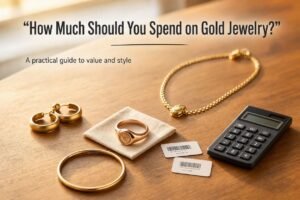
How much does gold jewelry cost ? Prices vary wildly — you can find a “gold” necklace for $15 or one for $1,500, and both can be legitimate purchases depending on what you’re actually buying. Understanding what drives the price helps you figure out what’s reasonable for your budget and goals.
What Actually Drives the Price
A few factors determine what you’re paying for, beyond just the design:
- Gold content (karat): Higher karat means more actual gold, which directly increases cost
- Solid gold vs. plated vs. filled: Solid gold costs significantly more than gold-plated or gold-filled pieces, which use a thin layer of gold over a base metal
- Craftsmanship and brand: Designer or brand markup can add substantially to the price beyond the raw material cost
- Current gold market price: Gold is a commodity, so prices fluctuate with the market, affecting solid gold pieces more than plated ones
Budget Ranges to Expect
Under $50: Almost always gold-plated or gold-vermeil pieces. Fine for testing a trend or occasional wear, but expect the plating to wear over time with regular use.
$50-200: A mix of higher-quality plated pieces and small, solid gold items (like simple stud earrings or thin bands) in lower karats.
$200-800: Where most everyday solid gold pieces from mid-range brands land — necklaces, bracelets, and rings in 14K gold with moderate detail.
$800+: Larger or more substantial solid gold pieces, 18K gold, or designer/branded pieces where craftsmanship and brand carry more of the price.
Cost Per Wear: A Useful Way to Think About It
Rather than focusing only on the sticker price, consider how often you’ll actually wear a piece. A $300 solid gold chain worn daily for years works out to a much lower cost per wear than a $50 trendy piece worn a handful of times before the plating fades or the style feels dated. This framing can make a higher upfront price feel more reasonable once you factor in years of use rather than a single purchase moment.
When Plated Jewelry Makes Sense
Gold-plated pieces aren’t a lesser choice across the board — they make genuine sense for:
- Testing a trend before committing to a solid gold version
- Statement pieces you’ll wear occasionally rather than daily
- Building out a larger stacked or layered look affordably
When Solid Gold Is Worth the Investment
Solid gold tends to make more financial sense for:
- Pieces you plan to wear daily for years
- Sentimental purchases you want to last and potentially pass down
- Items that touch skin directly and frequently, like earrings, where plating wear can also affect comfort
How much does gold jewelry cost ? Frequently Asked Questions
Is gold jewelry a good investment? Fine jewelry isn’t typically bought as a financial investment the way gold bullion is, since craftsmanship and design markup mean you’re unlikely to resell a piece for its full purchase price — but solid gold does retain more resale value than plated jewelry.
Why do two similar-looking gold necklaces have such different prices? The difference usually comes down to gold content (karat and whether it’s solid, filled, or plated) and brand markup, even when two pieces look nearly identical in photos.
Is it worth paying more for a well-known jewelry brand? It depends on your priorities — branded pieces often carry design and craftsmanship value beyond the raw materials, which can be worth it if the style and quality genuinely match the premium, but it’s not required to get quality gold jewelry.
Ready to shop within your budget? Check out our best gold bracelets and best gold hoop earrings guides for picks across different price points.

Pingback: How to Spot Good Gold Jewelry Deals And Avoid a Bad One