

If you have ever searched “what does tarnish gold look like” while holding a dull necklace in your other hand, you are not alone. Maybe you pulled out a necklace you hadn’t worn in a while and something looked off. The shine was gone, there was a darker cast to it, maybe even a few brownish spots near the clasp. Is that tarnish, dirt, or a sign the piece isn’t real gold at all? This guide shows you exactly what tarnished gold looks like on yellow, rose, white and 10K gold, why it happens, and how to tell it apart from plating that has worn through.
As an Amazon Associate I earn from qualifying purchases.
In This Article
First, Can Gold Actually Tarnish?
Pure 24K gold doesn’t tarnish. It’s one of the least reactive metals there is, which is a big part of why it has been prized for thousands of years. The catch is that almost no everyday jewelry is pure gold. A 14K ring is about 58% gold, and the rest is a mix of metals like copper, silver, zinc and nickel. Those other metals are the ones that react with air, moisture, sweat and chemicals.
So when people talk about tarnished gold, what they’re really seeing is the alloy metals reacting at the surface. The lower the karat, the more of those metals there are, and the more likely you are to see discoloration. A 22K bangle can go years looking the same, while a 10K chain worn daily might start to dull within months.
If you want a refresher on what each karat contains, our guide to 14K vs 18K gold breaks down the percentages and how they affect everyday wear.
What Tarnished Gold Looks Like: The Common Signs
The short answer to “what does tarnish gold look like?” is: duller, darker and patchier than it should be. Tarnish rarely shows up overnight. It builds slowly, which is why many people only notice it when they compare an old piece to a new one. Here is what to look for.
A dull, flat finish. The first stage is usually a loss of brightness. The gold still looks gold, but it no longer reflects light the way it did. It can look a little “matte” even on a piece that was originally polished.
A darker, warmer or muddier color. Yellow gold often shifts toward a deeper brassy or brownish tone. It can look as if someone put a thin smoky film over it.
Dark spots or patches. Tarnish tends to start in specific places: around the clasp, inside links, under a stone setting, or on the inside of a ring band where skin, soap and lotion collect. These spots can be light brown, reddish, gray or even close to black.
A film that comes off on a cloth. If you rub the piece with a soft white cloth and see a gray or black smudge, that’s a strong sign of surface tarnish. Real tarnish lives on the surface, so it transfers.
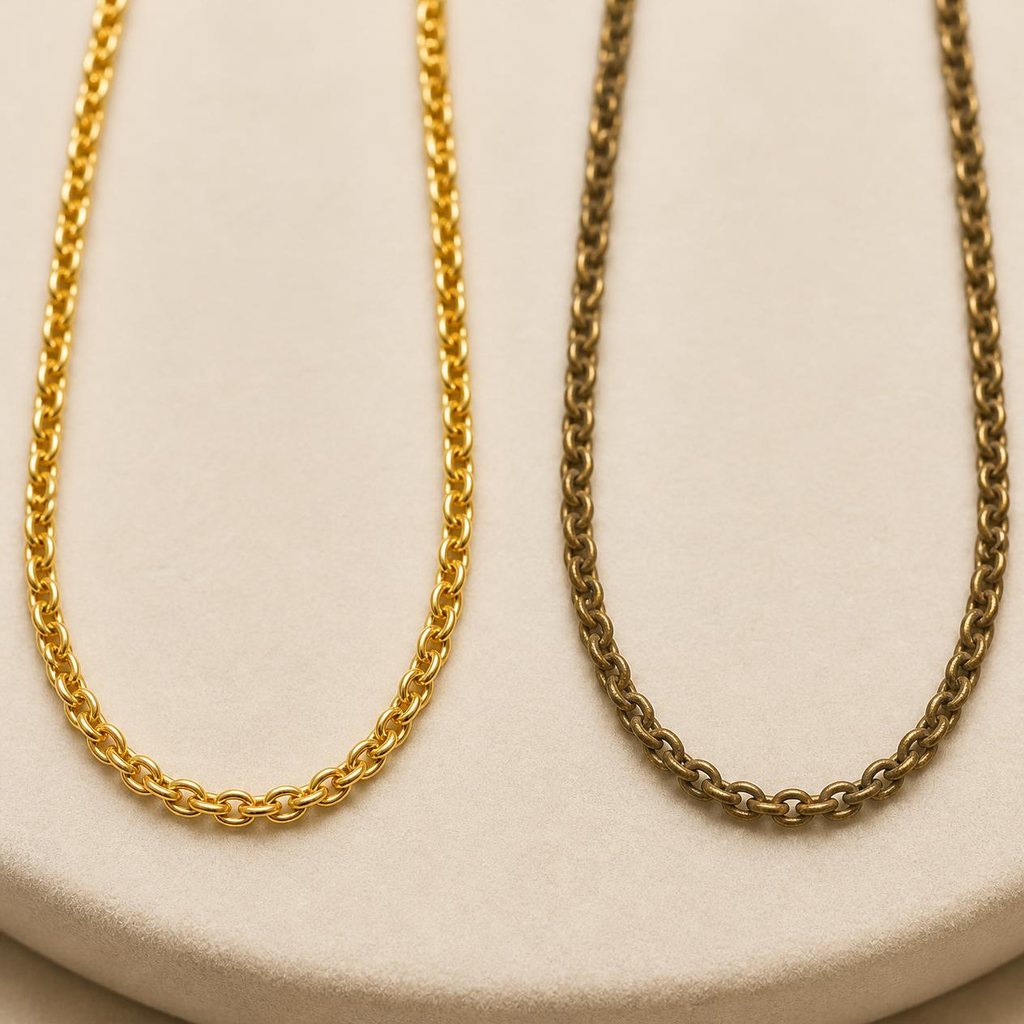
What Does Tarnished Yellow Gold Look Like?
Yellow gold is the version most people picture, and its tarnish is usually the easiest to recognize. A clean yellow gold piece has a bright, buttery warmth. Once it starts to tarnish, that warmth turns duller and slightly darker, closer to an old brass doorknob than a new coin.
On chains, you’ll often see the darkest color tucked between the links, where light doesn’t reach and residue builds up. On rings, check the underside of the band. If you wash dishes with your ring on, or apply hand cream several times a day, that inner surface tends to tarnish first and fastest.
Yellow gold tarnish is usually gradual and even. It doesn’t flake or peel. If you see the color coming off in patches and a different metal showing underneath, that’s not tarnish (more on that below).
What Does Tarnished Rose Gold Look Like?
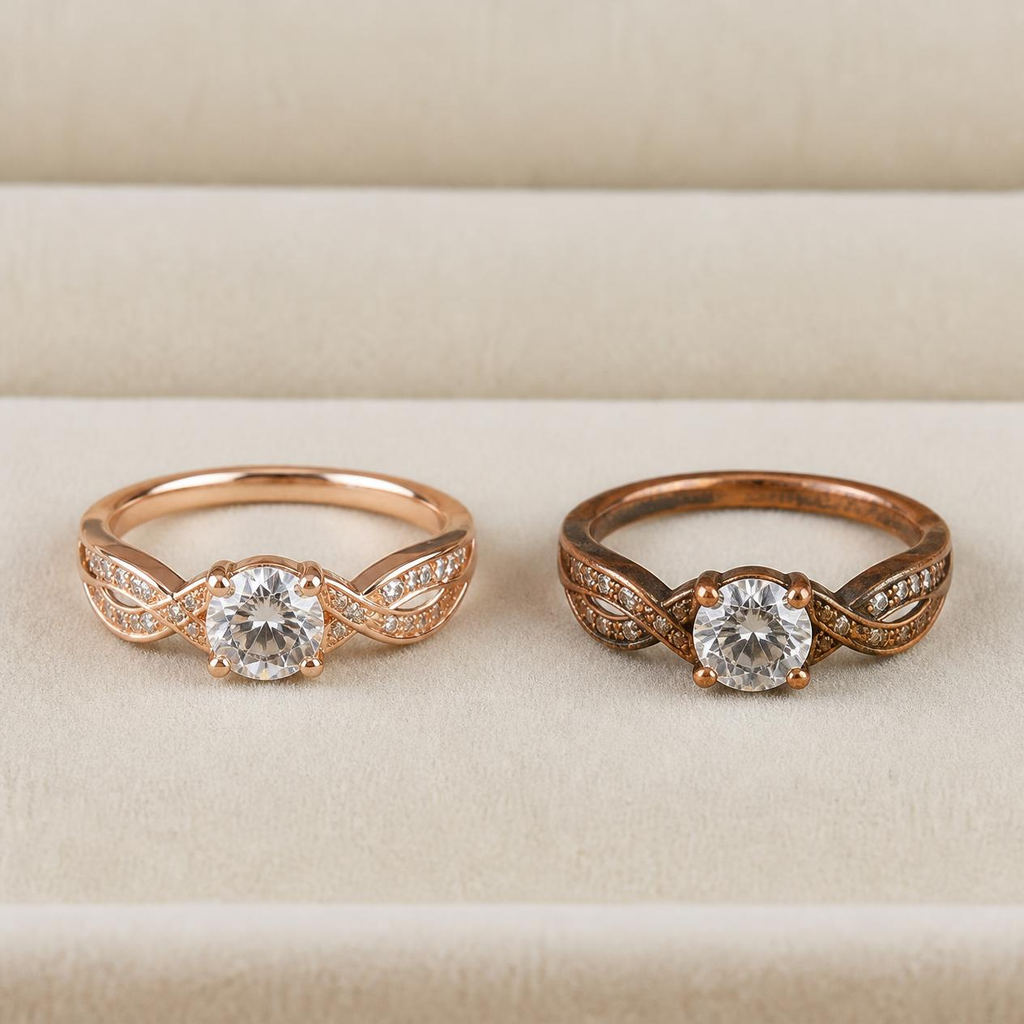
Rose gold gets its pink tone from a higher share of copper. Copper is one of the more reactive alloy metals, so rose gold can show changes a little sooner than yellow gold of the same karat. So what does tarnished rose gold look like in practice? Mostly, a deeper and warmer version of itself.
Tarnished rose gold tends to look deeper and redder than it did when new. Sometimes the soft blush pink drifts toward a coppery or even slightly orange-brown shade. In more advanced cases you might see darker reddish-brown spots, especially around settings and clasps. Interestingly, a lot of people actually like this slow deepening, since it gives the piece a vintage feel. Others prefer to keep the original pale pink, and regular gentle cleaning helps with that.
If you’re comparing the three main gold colors in general, our article on gold vs rose gold vs white gold explains how each one is made and how it ages.
What Does Tarnished White Gold Look Like?
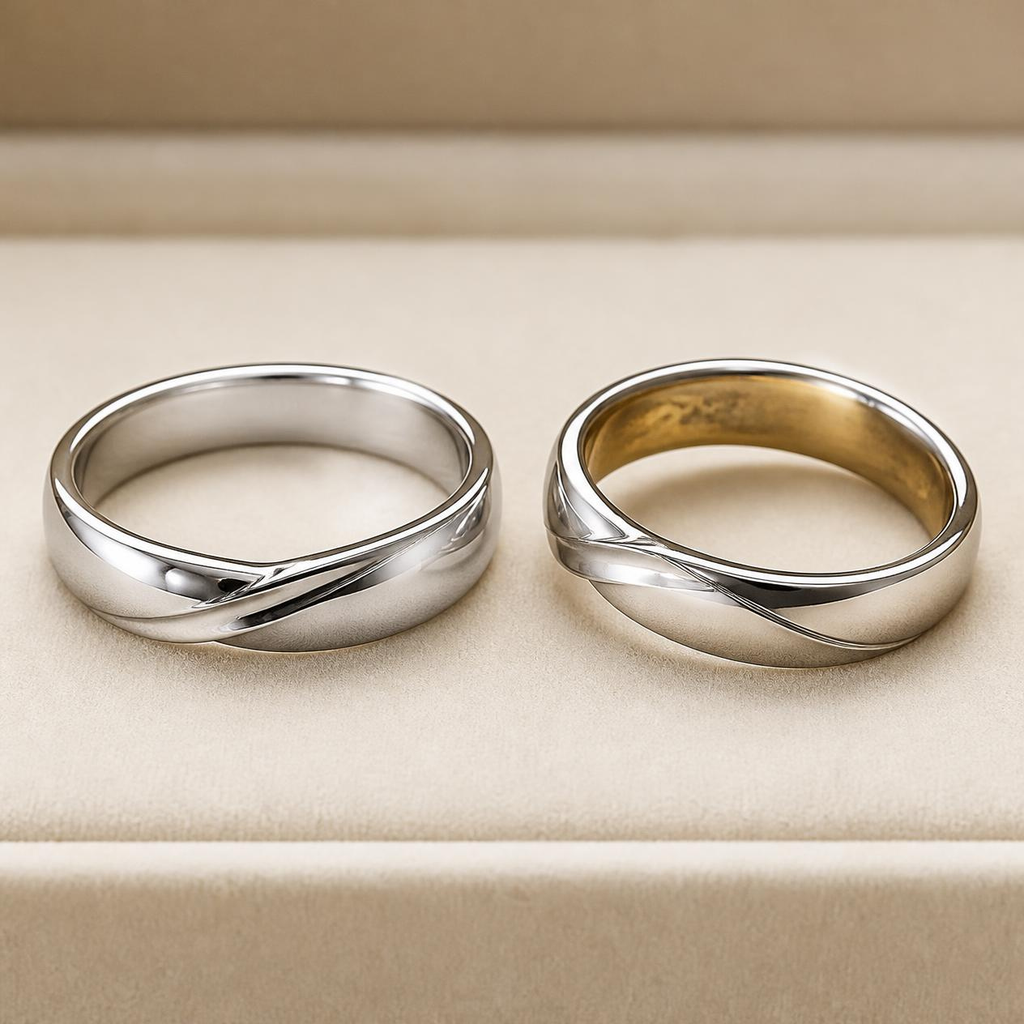
White gold is a special case. Under the surface, white gold is usually a pale, slightly yellowish alloy (gold mixed with metals like palladium or nickel). Most white gold jewelry is then coated with rhodium, a bright white metal that gives it that crisp, mirror-like finish.
What people often call “tarnished” white gold is really the rhodium wearing thin. Instead of darkening the way yellow gold does, the piece starts to look warmer, slightly yellow or champagne-toned in the spots that get the most contact. On a ring, that’s usually the bottom of the band and the edges. On earrings, it might be the posts or the parts that rest against your skin.
True tarnish on white gold can also happen, especially on lower-karat pieces with more nickel or silver in the alloy. In that case you’ll see a grayish, cloudy film rather than a yellow tint. Either way, a jeweler can clean and replate the piece, and it will look close to new again.
What Does Tarnished 10K Gold Look Like?
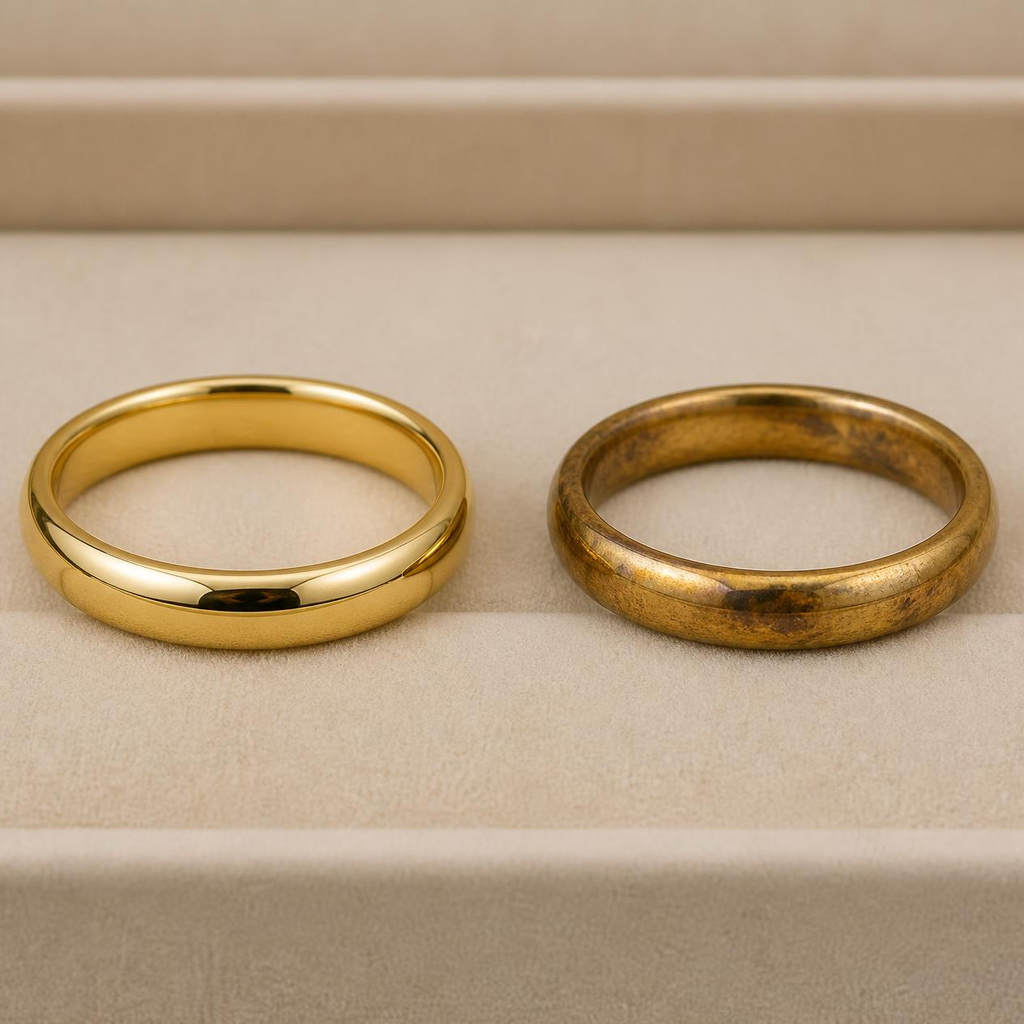
If you are asking “what does tarnished 10k gold look like?” and how it compares to higher karats, the answer comes down to the alloy. 10K gold contains about 41.7% gold, which means more than half the metal is something else. That makes it durable and affordable, but also the most prone to tarnish among the common karats.
Tarnished 10K gold often looks noticeably darker and less yellow than a 14K or 18K piece. It can take on a brownish, sometimes slightly greenish or grayish cast, and dark spots appear faster, particularly if the piece is worn in humid weather or sees a lot of sweat. A 10K chain worn to the gym regularly, for example, can show dark patches between the links within a season.
None of this means 10K is fake or poor quality. It simply has a different balance of metals, and it needs a bit more regular care to keep its color.
What Color Does Gold Tarnish?
So, what color does gold tarnish? There isn’t one single color, because it depends on which alloy metals are reacting. As a general guide:
- Brown or dark yellow: the most common look on yellow gold, caused mainly by copper and silver reacting.
- Reddish or coppery: typical of rose gold, because of its higher copper content.
- Gray or black: often from silver in the alloy reacting with sulfur (found in some foods, hot springs, wool and even certain cosmetics).
- Greenish: less common, usually linked to copper reacting with moisture and acids. You might also see this as a green mark on your skin rather than on the jewelry itself.
- Yellowish (on white gold): not tarnish as such, but rhodium plating wearing away.
Tarnish vs Worn Plating: How to Tell the Difference
This is where the question “what does tarnish gold look like” gets tricky, and it worries a lot of people for good reason. Gold-plated jewelry has only a thin layer of gold over a base metal like brass or copper. When that layer wears through, the result can look a lot like tarnish at first glance, but it’s a different problem.
Tarnish sits on top of the surface. It looks like a film or a darkening, and it usually wipes away (at least partly) with a polishing cloth. Underneath, the color is still gold.
Worn plating means the gold is physically gone in certain spots. You’ll see a sharp change in color, often silvery, pinkish or coppery, exactly where the piece rubs the most. Polishing doesn’t bring the gold back, and rubbing too hard can actually make the patch bigger.
A simple test: gently rub a discreet area with a soft jewelry polishing cloth. If the gold color returns, you were dealing with tarnish. If the patch stays a different color, or gets more obvious, the plating has worn through. Our guide to gold filled vs gold plated vs vermeil explains why some finishes last much longer than others.
If you aren’t sure whether a piece is solid gold to begin with, check for a karat stamp or run through the steps in how to tell if gold jewelry is real.
Why Gold Tarnishes Faster for Some People
Two people can buy the exact same ring and have completely different experiences. A few everyday habits make a real difference.
Skin chemistry plays a role. Sweat contains salts and acids, and some people’s skin is simply more reactive. Lotions, perfumes, sunscreen and hairspray all leave residue that sticks to metal. Chlorine in pools and hot tubs is especially hard on lower-karat gold. Household cleaners, particularly anything with bleach, can discolor gold quickly. Even storage matters: a necklace left in a humid bathroom, or tossed in a drawer with rubber bands or wool, will usually tarnish faster than one kept dry in a lined box.
A practical habit that helps: make your jewelry the last thing you put on and the first thing you take off. Let lotion and perfume dry before putting on rings or chains, and take them off before swimming, cleaning or working out.
What to Do If Your Gold Looks Tarnished
The good news is that tarnish on solid gold is almost always reversible at home. A soak in warm water with a few drops of mild dish soap, a gentle scrub with a soft baby toothbrush, then a rinse and a thorough dry will remove most surface film. For step-by-step instructions, see our full guide on how to clean gold jewelry.
For quick touch-ups between cleanings, a dedicated jewelry polishing cloth is handy to keep in a drawer or travel bag.
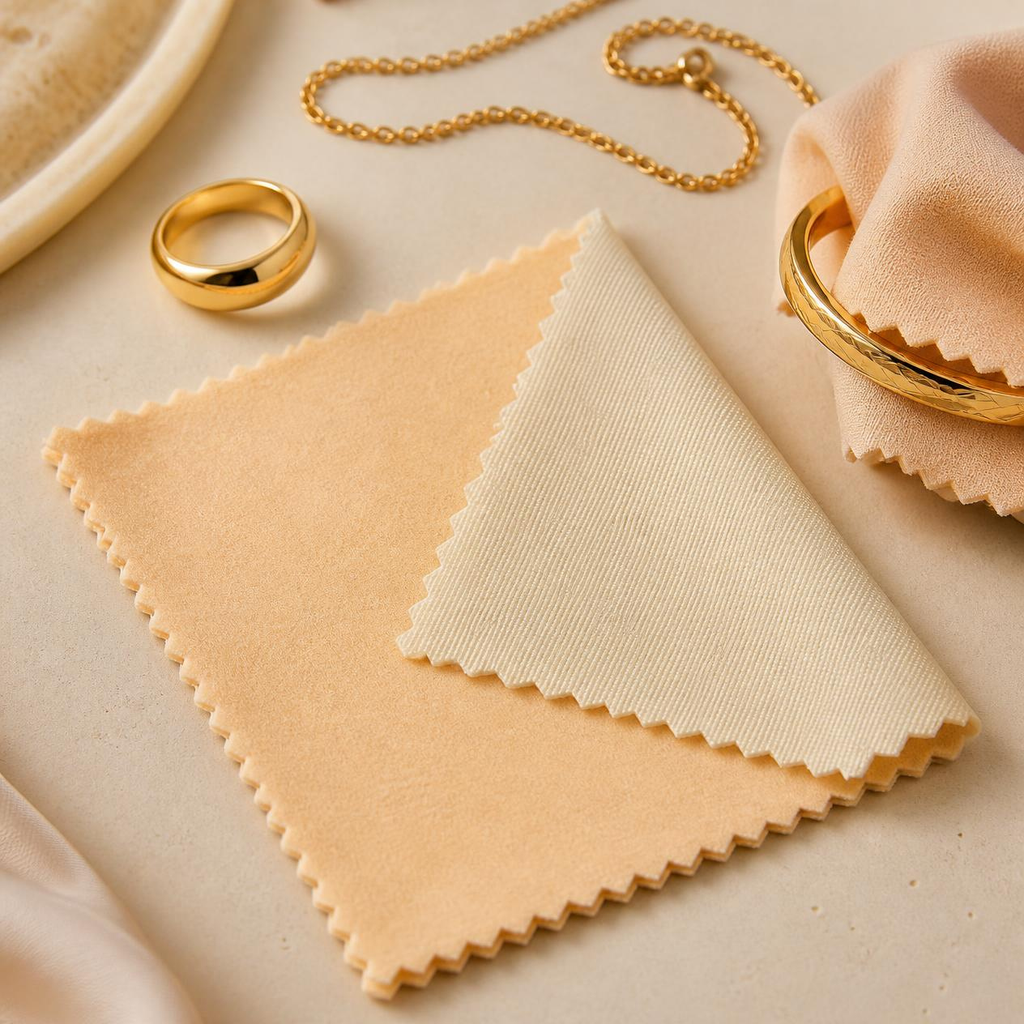
A two-layer jewelry polishing cloth (one side for cleaning, one for buffing) is a simple, low-cost way to bring back shine on solid gold between deeper cleans. Use light pressure only on plated pieces. Check current options for gold jewelry polishing cloths.
If a white gold piece looks yellow, cleaning won’t fix it. Replating with rhodium at a jeweler is the right move, and it’s usually quick and inexpensive. And if a plated piece has worn through to the base metal, cleaning won’t restore it either; at that point it’s a question of replating or replacing.
FAQ
What does tarnish gold look like in the early stages?
Early tarnish usually looks like a slight loss of shine rather than a color change. The piece seems a little flat or hazy, and you may notice faint darker shading between chain links or on the inside of a ring band. At this stage a quick wipe with a soft polishing cloth is often enough to bring it back.
Does real gold tarnish?
Pure 24K gold does not tarnish, but most real gold jewelry is an alloy (10K, 14K or 18K) and the other metals in it can tarnish over time. Higher karats tarnish less and more slowly. So a bit of tarnish doesn’t mean your gold is fake.
Can tarnished gold be fixed?
Yes, in most cases. Surface tarnish on solid gold comes off with warm soapy water, a soft brush and a polishing cloth. White gold that has turned yellow needs rhodium replating at a jeweler. Plated jewelry where the gold has worn away can be replated, but not “cleaned” back to gold.
Why is my gold turning black?
Black marks usually come from silver or copper in the alloy reacting with sulfur, chlorine or chemicals in cosmetics and cleaning products. It can also be makeup or skin residue collecting on the metal. A gentle soapy clean usually removes it, and keeping your jewelry away from lotions and chemicals helps prevent it.
Keep Your Gold Looking Its Best
Once you have a clear answer to “what does tarnish gold look like,” the whole thing becomes much less alarming: in most cases it’s just a sign your jewelry needs a little care, not that something is wrong with it. For a simple routine that keeps every piece bright, read how to clean gold jewelry, and if you’re still unsure what you’re working with, our guide to gold stamps like 14K, 14KP and 585 will help you read the markings.